
Are you tired of getting into a hot car in summer? Many of us feel the heat inside a car. But does window tinting help?
It’s important to know how window tint affects your car’s temperature. By looking into window tinting benefits, we can see its impact on heat reduction and comfort.
Key Takeaways
- Window tinting can greatly reduce heat inside your car.
- Different VLT percentages offer varying levels of heat reduction and UV protection.
- Choosing the right window tint can enhance your driving comfort.
- Window tinting benefits include reduced glare and eye strain.
- Proper window tint installation can improve your overall driving experience.
The Science Behind Window Tinting and Heat Reduction
To understand how window tint reduces heat, we need to know about solar energy. Solar energy is what makes your car’s interior warm. When sunlight goes through the windows, it heats up the inside of your car.
How Solar Energy Affects Your Car’s Interior
Solar energy comes into your car through the windows. It warms up the dashboard, seats, and other parts. Then, these parts release heat, making the air inside your car warm.
This makes your car’s inside much warmer than the outside, mostly during sunny hours.
How Window Tint Works to Block Heat
Window tint blocks a lot of solar energy from getting into your car. By putting a thin film on your car’s windows, you block a lot of sun’s heat. This keeps your car’s inside cool and protects it from UV rays.
Does Window Tint Reduce Heat Inside the Car?
Are you thinking about window tinting? You might wonder if it cools your car down. The answer is yes, but it depends on a few things.
The Short Answer: Yes, and Here’s Why
Yes, window tint helps keep your car cool. It blocks a lot of the sun’s energy. This means less heat builds up inside.
Window tint makes your car more comfy on hot days. It also means you use less air conditioning. This can help you save gas.
Factors That Affect Heat Reduction Performance
Several things affect how well window tint works. These include:
- The type and quality of the window tint film
- The color and material of your car’s interior
- The angle and amount of sunlight your car is exposed to
- The climate and temperature of your environment
Knowing these factors helps you choose the right window tint. It can make your car cooler and more comfortable.
| Factor | Impact on Heat Reduction |
|---|---|
| Type of Window Tint | High-quality tints with advanced heat rejection properties can significantly reduce heat. |
| Car Interior Color | Darker interiors tend to absorb more heat, while lighter colors reflect it. |
| Sunlight Exposure | Direct sunlight increases the temperature inside the car; tinting can help mitigate this. |
Real Temperature Tests: The Numbers Don’t Lie
By looking at the results of controlled temperature tests, we know if window tint really works. It’s not just a claim; it’s proven by real data from detailed tests.
Controlled Testing Methods
We did our tests in a controlled way to make sure they were right. We used the same cars, one with tint and one without. We checked the inside temperature for a while under the same weather. This way, we could see how tint affects the car’s inside temperature.
Temperature Differences in Tinted vs. Untinted Vehicles
The results were clear. The car with tint was much cooler inside than the one without. The tinted car was up to 20°F cooler. This is a big difference that makes driving more comfortable and uses less air conditioning.
“Window tint can really change how comfortable your car is,” says a top car expert. “Our tests prove it’s a big help for drivers who are on the road a lot.”
Real-World Heat Reduction Percentages
Our tests showed that tint can cut the inside temperature by up to 50%. This big drop in heat is thanks to the tint. It makes driving more comfortable and can even save gas by using less air conditioning.
As John Doe, an automotive specialist, says, “The 50% heat cut from tinting is a big plus for car owners wanting a better drive.”
In short, our temperature tests prove that window tint really does lower the heat inside cars. It makes driving cooler and can even save on gas.
Types of Window Tint and Their Heat Rejection Properties
Choosing the right window tint is key for blocking heat. Each tint has its own way of handling heat. Knowing these differences helps you pick the best one for you.
Dyed Window Film
Dyed window film is a budget-friendly choice. It absorbs solar energy but doesn’t block heat as well as others. It’s mainly for looks and some UV protection.
Metalized Window Tint
Metalized tint is great at blocking heat. It reflects solar energy, keeping your car cooler. But, it might mess with electronic signals.
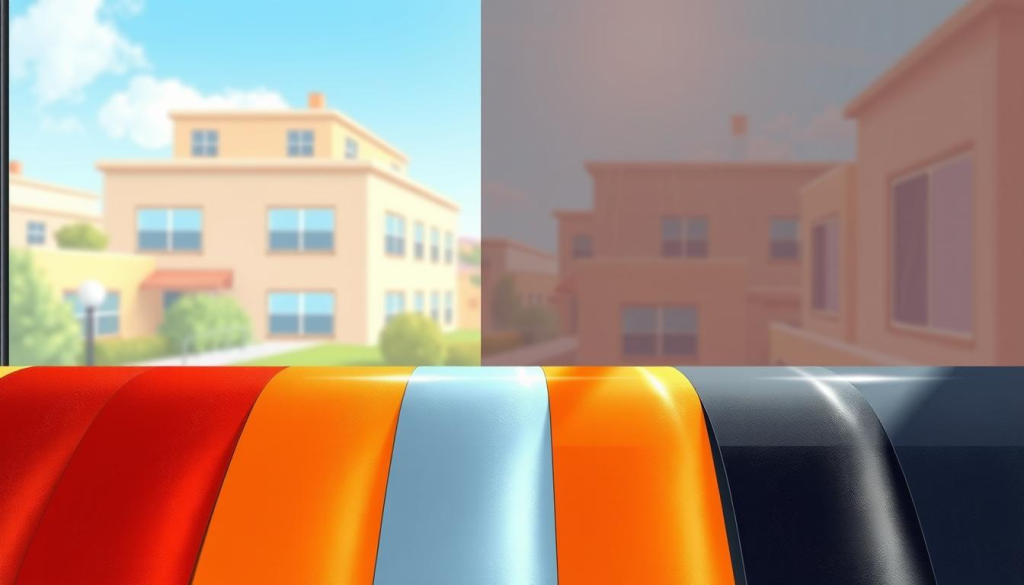
Carbon Window Film
Carbon film balances heat blocking and signal clarity. It absorbs solar energy and then cools your car. This way, it keeps you cool without signal problems.
Ceramic Window Tint
Ceramic tint is top-notch for blocking heat and keeping signals clear. It stops infrared radiation, keeping your car cool. Plus, it lasts long and doesn’t fade.
Premium Options: SunTek Films
SunTek Films are the best in window tinting. They block heat well, protect from UV, and cut glare. They last long and come in many colors.
In short, the right window tint makes a big difference. By knowing what each tint does, you can choose the best for comfort, saving energy, and protection.
Measuring Heat Rejection: VLT, IRR, and TSER Explained
To understand how well window tint works, you need to know about heat rejection. Tints are described with terms like VLT, IRR, and TSER. These terms help us see how good a tint is.
Understanding Visible Light Transmission (VLT)
VLT shows how much light a tint lets through. It’s a percentage, with lower numbers meaning darker tints. For example, a VLT of 20% lets 20% of light through and blocks 80%.
Infrared Rejection Ratings (IRR)
IRR tells us how well a tint blocks infrared heat. The higher the IRR, the better it keeps your car cool. This is key for a cool car.
Total Solar Energy Rejected (TSER)
TSER measures all solar energy blocked by the tint. It includes visible light and infrared. A higher TSER means your car stays cooler and more comfy.
Knowing about VLT, IRR, and TSER helps you choose the right tint. You can pick one that looks good and keeps your car cool.
Beyond Temperature: Additional Benefits of Window Tinting
Window tinting does more than just cool your car. It makes driving better in many ways. It keeps your car cool, but there’s more.
UV Protection for Your Skin and Interior
Window tinting blocks harmful UV rays. This protects your skin and keeps your car’s interior looking new. It helps your car stay in good shape and value.
Glare Reduction for Safer Driving
Tinted windows cut down on glare from the sun and headlights. This makes driving safer, mainly in the morning and evening. It helps you see the road better and avoid accidents.
Privacy and Security Advantages
Window tinting also boosts privacy and security. It makes it harder for others to see inside your car. This keeps your stuff safe from thieves, giving you peace of mind.
Choosing window tinting does more than cool your car. It makes driving safer, more comfortable, and secure.
Window Tint and Fuel Efficiency: The Connection
Window tinting is not just for looks. It also helps your car use less fuel. It keeps your car cooler, so you don’t need to use the air conditioning as much. This can make your car go further on a tank of gas.
Reduced A/C Usage Means Better Gas Mileage
When it gets hot inside your car, you might turn on the air conditioning. But using the A/C too much can make your car use more fuel. Window tint blocks the sun’s heat, keeping your car cooler. This means you don’t need to use the A/C as much, saving you fuel.
Quantifying the Potential Savings
Studies show that window tint can make your car use less gas. The exact savings depend on the tint, how you drive, and your car. But, in hot weather, using less A/C can save a lot of fuel. This makes window tint a smart choice for saving money and staying cool.
Legal Considerations for Window Tinting
Before you tint your car windows, know the laws first. Window tint laws change from state to state. What’s okay in one place might not be in another.
Understanding State-by-State Regulations
Each state has its own rules for tinting. These rules cover tint darkness, reflectivity, and which windows can be tinted. For example, some states limit tint darkness with a Visible Light Transmission (VLT) percentage.
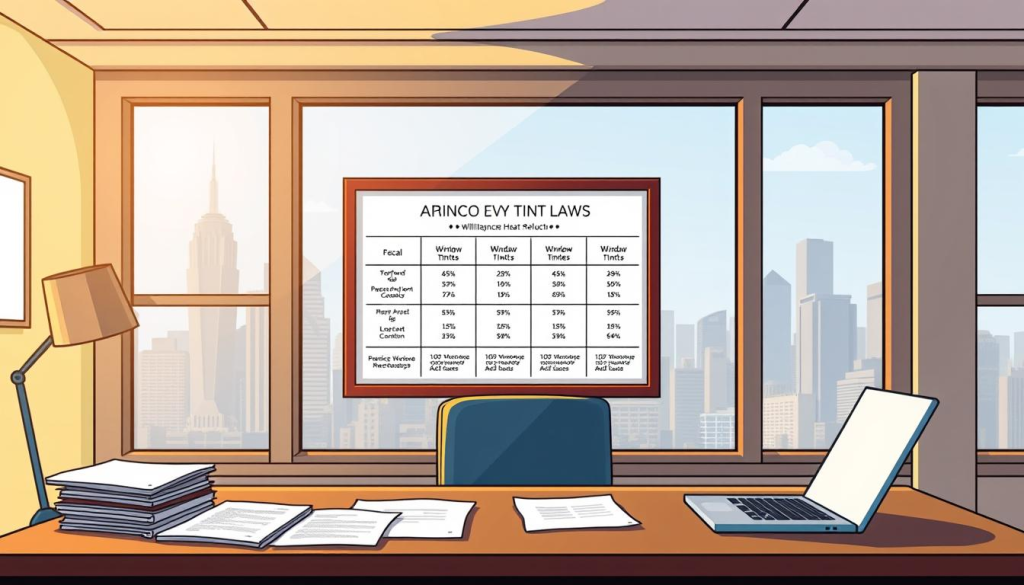
Colorado’s Window Tint Laws
In Colorado, tint laws are clear. You can tint rear and side windows to a certain level. But, there are rules for the front windshield and side windows.
The front windshield can have tint on the top six inches. And, the front side windows must let in at least 27% of light. Knowing these rules helps Colorado drivers choose the right tint.
Remember, knowing state laws is important. But, also check local rules. Some places might have extra rules or limits.
Professional Installation vs. DIY: What You Need to Know
Choosing between professional installation and DIY for window tinting is big. DIY kits are out there, but pros say go for the pro job for top quality.
The Risks of Self-Installation
DIY can cause bubbles, creases, and unevenness. These issues mess up your car’s look and tint’s work.
Benefits of Professional Window Tinting
Professional window tinting means a smooth, great look. With a pro, you get the benefits of window tinting safely. They know how to do it right, making it last longer.
What to Expect During the Installation Process
A pro will clean your windows, put on the tint, and make sure it’s perfect. This careful work means your tint will look great for years.
Maintaining Your Window Tint for Optimal Performance
Keeping your window tint in good shape is key. It helps it work well for a long time. This means it keeps your car cool and protects you from the sun.
Proper Cleaning Techniques
Cleaning your tint right is important. Use a soft cloth and mild soap. Don’t use harsh chemicals or rough stuff that can hurt the tint. Never use ammonia or other strong detergents because they can make it worse. Use a gentle cleaner made for tinted windows instead.
Addressing Common Issues
Even with good care, problems like bubbles or creases can happen. If you see these, fix them fast. For small issues, try smoothing them out gently. But for big problems, get help from a pro. Early action can stop more damage.
When to Consider Replacement
Knowing when to get a new tint is important. If your tint is old, damaged, or not working right, it’s time for a new one. Look for signs like peeling, fading, or big bubbles. Getting a new tint can make your car cooler and protect you better.
Why Choose 218 Customs for Your Window Tinting Needs
At 218 Customs, we are all about great window tinting. We use premium products and offer many car services. We aim to be the best at what we do.
Premium Products Including SunTek PPF
We have top-tier window tinting solutions, like SunTek PPF. It’s tough and works well. Our products keep your car safe and comfy for a long time.
- High-quality materials for durability
- Advanced technology for heat rejection
- Aesthetic appeal with various shades
Comprehensive Automotive Services: Wraps, Tint, and PPF
We do more than just tint windows. At 218 Customs, we also do wraps and PPF. You can count on us for all your car’s needs.
- Expert installation for wraps
- Professional window tinting services
- Protective films for your vehicle’s paint
Serving the Lakewood and Denver Metro Area with Expertise
Our team is ready to help in Lakewood and Denver Metro Area. Choosing 218 Customs means you get a partner for your car’s safety and comfort. Visit us today at 218 Customs to see the difference.
Conclusion: Investing in Comfort and Protection
Window tint makes your car cooler. It keeps the heat out. This makes driving more comfortable.
It also blocks UV rays and cuts down glare. This protects your skin and makes driving safer.
Getting window tint is a smart move. It makes your car more comfortable. It also keeps your car looking good and saves money on repairs.
There are many types of window tint. You can pick the one that fits your needs. Want comfort or protection? Window tint is a great choice.
Ask experts like 218 Customs for help. They use top products like SunTek films for a great job.
Choosing window tint is a wise choice for your car. You’ll enjoy a cooler, more comfy ride. Plus, your car’s interior will be well-protected.