Do you know the car window tint laws in your state? It’s important to know the legal tint percentage. This helps avoid fines and makes sure your tint meets state-specific tint regulations.
Did you know these laws change a lot across the United States? Some places let you have darker tint on rear windows. But others are stricter about all windows.
Knowing the legal tint percentage for your state can prevent fines. It’s key to know the laws about tinting windows in your area.
Key Takeaways
- Car window tint laws vary by state.
- Understanding legal tint percentages is crucial for compliance.
- State-specific tint regulations can affect your vehicle’s tint.
- Familiarizing yourself with local laws can save you from fines.
- Checking your state’s specific regulations is essential.
Understanding Window Tint Percentages and Measurements
To make sure your car’s window tint is legal, you need to know about tint percentages. Tint percentage shows how much light can go through the window. It’s key to follow auto window tint guidelines and vehicle tint percentage limits set by your state.
How Tint Percentage Is Measured
Tint percentage is found by seeing how much light goes through the tinted window. A special tool called a tint meter is used for this. Knowing this helps make sure your car’s tint meets window film legal requirements. A lower number means the tint is darker.
Visible Light Transmission (VLT) Explained
Visible Light Transmission (VLT) shows how much light can go through a window. For tinting, VLT tells us how dark the tint is. A higher VLT means more light gets through, so the tint is lighter. Knowing VLT helps pick the right tint for your car and follows the law.
Benefits of Window Tinting for Your Vehicle
Window tinting does more than just look good. It makes your car safer and more comfy to drive. It’s a favorite among car owners for many reasons.
UV Protection and Health Benefits
Window tinting blocks harmful UV rays. High-quality tints can block up to 99% of UV radiation. This keeps you and your family safe from skin cancer and cataracts.
Heat Reduction and Comfort
It also keeps your car cool. By rejecting solar heat, tints make your car cooler. This is great in hot weather and can even save gas.
Privacy and Security Advantages
Tinted windows add privacy and security. They make it harder for thieves to see inside. They also help keep glass together in accidents, making you safer.
Some key benefits of window tinting include:
- Enhanced UV protection
- Improved heat reduction
- Increased privacy and security
- Reduced glare
- Protection of interior from fading
What Percentage Tint Is Legal in My State: General Guidelines
Legal tint percentages for cars change a lot from state to state. It’s key to know what’s allowed in your area. This info helps you choose the right tint for your car.
Front Windshield Regulations
States have rules for tint on front windshields. You can usually have a non-reflective tint on the top part. But, the exact amount allowed can differ.
Front Side Windows Rules
Rules for tint on front side windows also vary. Some places let you have darker tint, while others need a higher VLT. Always check your state’s rules to avoid trouble.
Rear Windows and Back Windshield Standards
Rear windows and back windshields have looser rules. Many states let you have any tint on these. But, it’s still good to check your state’s rules.
Knowing these guidelines and your state’s auto window tint guidelines is important. It helps you follow state-specific tint regulations. You’ll get UV protection and keep cool while staying within the legal tint percentage.
Northeastern States Tint Laws
If you own a car in the Northeast, you need to know the tint laws. Each state has its own rules about how dark tint can be. It’s important to know what’s allowed in your state.
In states like New York, New Jersey, and Pennsylvania, tint laws are different. Let’s look at what each state says about tint.
New York, New Jersey, and Pennsylvania Regulations
In New York, the windshield’s top 6 inches can have tint. But, the side windows must let in more than 70% of light. New Jersey lets you have tint that lets in at least 35% of light on side windows. And Pennsylvania requires more than 70% for side windows.
| State | Front Windshield | Front Side Windows |
|---|---|---|
| New York | Non-reflective tint on top 6 inches | More than 70% VLT |
| New Jersey | Non-reflective tint on top AS-1 line | At least 35% VLT |
| Pennsylvania | Non-reflective tint on top 4 inches | More than 70% VLT |
New England States Tint Requirements
Other New England states also have tint rules. For example, Massachusetts and Connecticut have their own laws. It’s important to follow these laws to avoid fines.
Knowing these rules helps you choose the right tint for your car. Always check for updates on these laws.
Southeastern States Tint Regulations
If you’re driving in the Southeast, you need to know the tint laws. This area is very sunny. So, there are rules for window tinting to keep everyone safe.
Florida, Georgia, and the Carolinas
Florida lets you have a 28% VLT on front windows. But, the back windows can be any darkness. Georgia says you can have a 32% VLT on front windows.
In North Carolina and South Carolina, the rules are different. North Carolina lets you have a 35% VLT on front windows. South Carolina says you can have a 27% VLT. It’s very important to know these rules.
The National Conference of State Legislatures says, “State laws about window tinting are very different. So, drivers need to know the laws in each state.”
Gulf Coast States Tint Laws
The Gulf Coast states have their own tint laws. Alabama lets you have a 32% VLT on front windows. Louisiana and Mississippi also have rules for tint darkness.
“The laws about window tinting are to keep drivers safe and visible. Knowing these laws can help you avoid fines and penalties.”
Knowing the tint laws in the Southeast can let you enjoy tinting your car. But, you must follow the law.
Midwestern States Window Tint Laws
If you’re driving in the Midwestern states, knowing the window tint laws is key. Each state has its own rules about window film legal requirements and auto window tint guidelines. Knowing these laws helps you avoid fines and keeps your car legal.
Illinois, Ohio, Michigan, and Wisconsin
In Illinois, the legal tint percentage for the front side windows is 26%. The rear windows can be any darkness. Ohio lets you have a 50% tint on the front side windows. There’s no limit on the rear windows.
Michigan allows a 15% tint on the front side windows. Like Ohio, there’s no limit on the rear windows. Wisconsin has a 50% limit on the front windshield and 35% on the front side windows.
- Illinois: 26% front side, any darkness rear
- Ohio: 50% front side, no restriction rear
- Michigan: 15% front side, no restriction rear
- Wisconsin: 50% front windshield, 35% front side
Missouri, Iowa, and Other Central States
Missouri lets you have a 35% tint on the front side windows. There’s no limit on the rear windows. Iowa’s rules allow a 70% tint on the front windshield and 50% on the front side windows.
Other central states like Minnesota and Indiana have their own rules. Minnesota requires 50% on the front side windows. Indiana allows 30% on the front side windows.
It’s important to check the auto window tint guidelines for each state you’ll drive through. This ensures you follow local laws. By doing this, you can enjoy window tinting without legal trouble.
Western States Tint Regulations
Car window tint laws change a lot in the Western United States. It’s key for car owners to know these laws. This helps avoid fines and makes sure the tint is legal.
California, Oregon, and Washington
In California, the front windows must let in more than 70% of light. The back windows have no rules. Oregon wants at least 35% VLT for front windows. Washington says the front windows must let in at least 24% of light. Here’s how these states compare:
| State | Front Side Windows VLT | Rear Side Windows VLT | Back Window VLT |
|---|---|---|---|
| California | >70% | No restriction | No restriction |
| Oregon | >35% | No restriction | No restriction |
| Washington | >24% | No restriction | No restriction |
Mountain States Tint Requirements
The Mountain states have their own tint rules. Colorado needs at least 27% VLT for front windows. Utah lets you have 43% VLT for the same. Arizona requires 33% VLT for front windows. Always check the laws for each state you visit.
Knowing thestate-specific tint regulations helps you follow the law. This way, you can enjoy tinted windows without worrying about fines.
Penalties and Enforcement of Window Tint Laws
Vehicle owners need to know the rules about window tints. Not following automotive tint laws can lead to fines. It’s important to keep your vehicle legal.
Common Fines and Violations
Fines for tint law violations differ by state. A first-time fine can be $25 in some places. But in others, it can be up to $500 or more. If you get caught again, the fines go up and can even be a misdemeanor.
| State | First Offense Fine | Repeat Offense Fine |
|---|---|---|
| California | $25 | $250 |
| Florida | $100 | $500 |
| New York | $150 | $300 |
How Tint Laws Are Enforced
Police use special tools to check tint levels during stops. They also do random checks to make sure vehicles follow tint laws.
Following what percentage tint is legal in my state is key. It’s not just to avoid fines. It’s also for everyone’s safety on the road.
Types of Window Tint Films and Their Properties
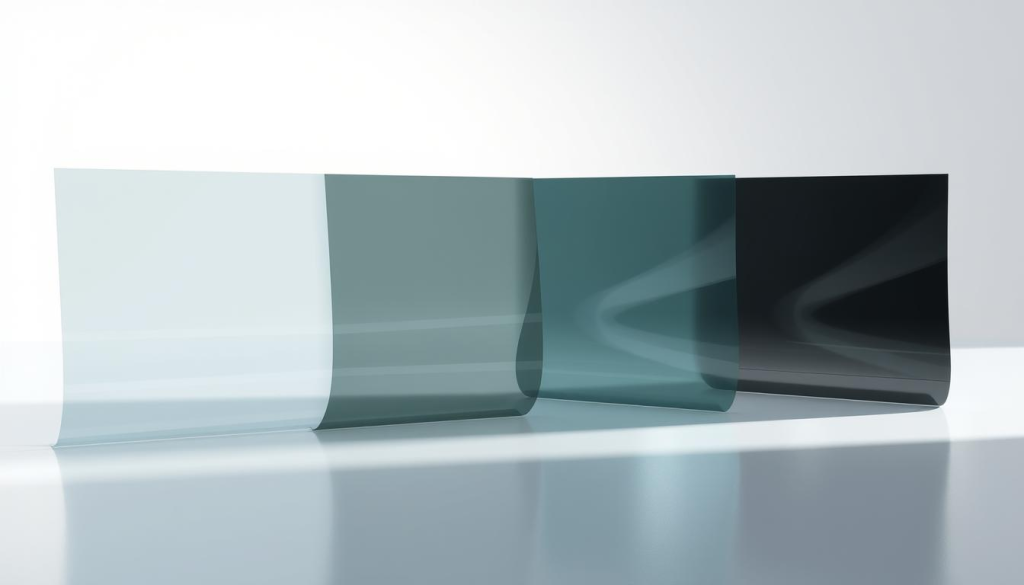
Window tint films come in different types. These include dyed, metallic, and ceramic. Each type meets different needs and tastes. It’s important to know these options to pick the best tint for your car.
Dyed vs. Metallic vs. Ceramic Films
Dyed films are affordable and block glare. But they don’t block heat as well as others.
Metallic films reflect heat and UV rays. They block more heat than dyed films. But, they might mess with electronic signals.
Ceramic films are top-notch. They block a lot of heat, protect from UV rays, and don’t mess with electronics. They cost more but offer the best benefits.
| Film Type | Heat Reduction | UV Protection | Electronic Interference |
|---|---|---|---|
| Dyed | Moderate | Good | No |
| Metallic | Good | Excellent | Yes |
| Ceramic | Excellent | Excellent | No |
Premium Options for Maximum Benefits
Ceramic window tint films are the best choice for top performance. They block a lot of heat and UV rays. They also stay clear and last long.
When picking a tint, think about the film type. Also, check if it meets window film legal requirements and auto window tint guidelines in your area.
Why Choose 218 Customs for Your Window Tinting Needs
218 Customs is a top pick for car owners looking for great window tinting. They focus on quality and follow the rules. They make sure you get the right tint for your car.
Premium SunTek PPF Products and Expert Installation
218 Customs uses premium SunTek PPF products. These products last long and work well. Their team installs the tint perfectly, giving you the best look.
Comprehensive Services: Tint, Wraps, and Paint Protection
218 Customs does more than tint windows. They also do vehicle wraps and paint protection. This means your car gets full protection and looks just how you want it.
Lakewood’s Trusted Tinting Professionals
218 Customs is known as Lakewood’s go-to tinting team. They have lots of experience and care about making customers happy.
Expertise in Colorado and Multi-State Compliance
218 Customs knows all about state-specific tint regulations. They make sure your tint is legal in Colorado and other places. You won’t have to worry about what percentage tint is legal in your state.
| Service | Description | Benefits |
|---|---|---|
| Window Tinting | Premium SunTek PPF products | UV protection, heat reduction |
| Vehicle Wraps | Custom designs and installation | Personalization, advertising |
| Paint Protection | Advanced paint protection films | Scratch resistance, longevity |
Conclusion: Staying Legal While Enjoying the Benefits of Window Tint
Choosing the right window tint is important. It’s not just for looks. It also helps you follow automotive tint laws in your state.
Knowing about legal tint percentage and permissible tint darkness levels is key. This way, you can avoid fines. You also get to enjoy UV protection, heat reduction, and more privacy.
Window tint laws change a lot from state to state. In California or New York, knowing the rules is crucial. This helps you avoid trouble.
Services like 218 Customs can help. They make sure your tint is installed right. They also help you pick a tint that looks good and follows the law.
Buying good window tint from places like SunTek PPF Products is smart. Getting it installed by experts makes driving better. You get a cooler, private car, safe from UV rays, all while following the law.
Make a smart choice and enjoy window tinting safely and legally.