
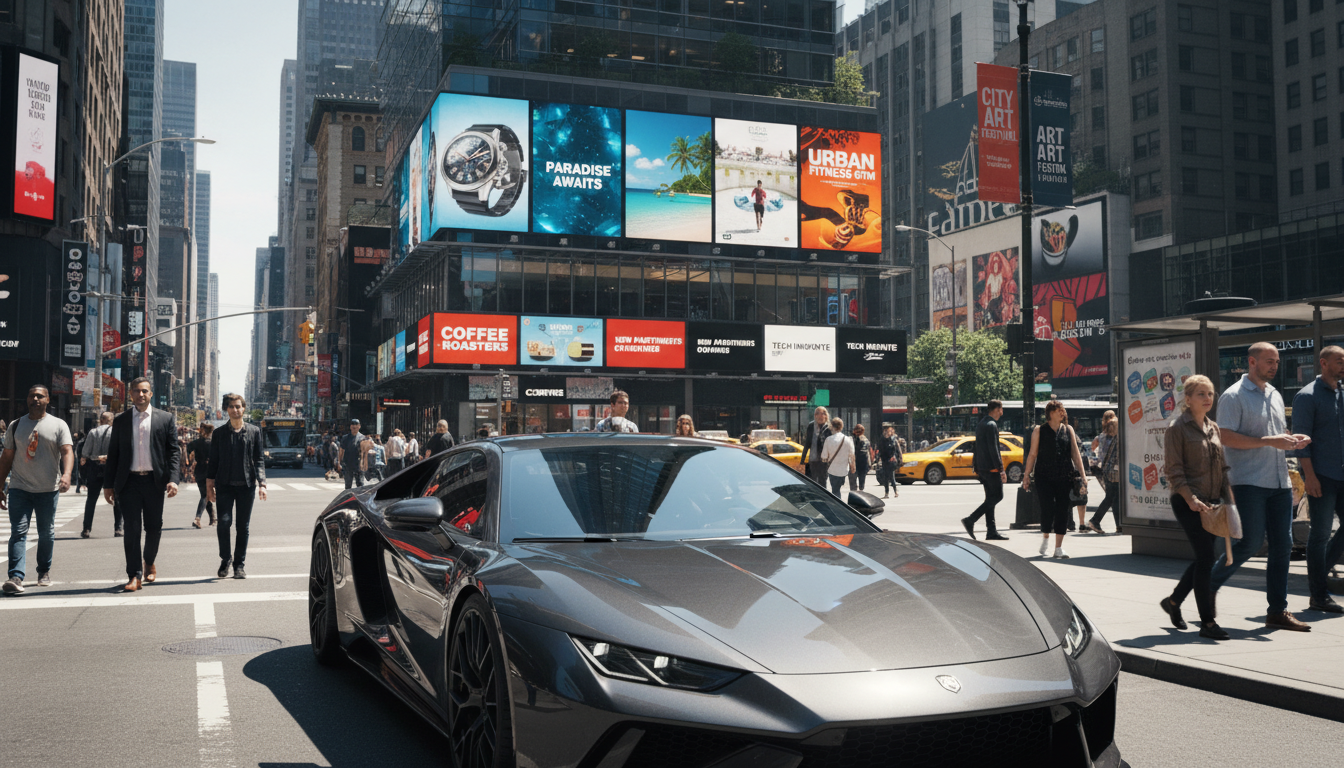
In today’s market, grabbing people’s attention is tough. Effective outdoor advertising can really help businesses. It lets them reach more people.
Outdoor media is key in marketing. It offers a special way to connect with customers. By using proven tactics, businesses can get more from their ads.
Key Takeaways
- Understand the importance of outdoor media in a marketing strategy
- Discover proven tactics to increase visibility
- Learn how to maximize return on investment
- Explore the role of outdoor advertising in a comprehensive marketing plan
- Identify best practices for implementing effective outdoor campaigns
The Current State of Outdoor Advertising in 2023
2023 is a big year for outdoor ads. New tech and changes in what people like are key. Knowing what’s happening now is vital for businesses wanting to be seen.
Statistics and Market Growth
The outdoor ad market is growing fast. In 2022, it was worth about $38.3 billion. It’s expected to grow 4.5% each year until 2028.
This growth comes from more people living in cities. Also, more demand for digital ads and using data in ads.
Post-Pandemic Recovery and Consumer Behavior
After the pandemic, people started going outside more. This is good for outdoor ads. The pandemic also made digital ads more popular.
Now, advertisers need to find new ways to grab people’s attention. They must keep up with how people are changing.
Here are some key stats about how the pandemic changed outdoor ads:
- More people walking around cities by 15% than before the pandemic.
- 20% more people seeing digital ads outside.
- More people want to see and do things outside, not just watch ads.
Understanding Different Types of Outdoor Advertising
Outdoor ads come in many forms. Each has its own good points and tricky parts. This lets businesses pick the best ways to reach their goals.
Traditional Billboards
Traditional billboards are very well-known. They are seen a lot and work well where lots of people walk by. For more on billboards, check out a detailed guide on OOH ads.
Digital Displays
Digital displays change the game with dynamic content that can be updated fast. They’re perfect for quick promotions and events.
Street Furniture Advertising
Street furniture ads are on benches, bus shelters, and more. They’re a quiet but powerful way to reach people every day.
Transit Advertising
Transit ads are on buses and trains. They’re great for people on the move.
Guerrilla and Ambient Advertising
Guerrilla and ambient ads are creative and sometimes shocking. They grab attention and are good for getting your brand known.
Success in outdoor ads comes from knowing what each type does best. Use this knowledge to meet your marketing goals.
Outdoor Advertising Effectiveness: Key Metrics and Measurements
Outdoor ads can be measured in many ways. This helps advertisers see how well their ads are doing. Knowing these metrics is key to making ads better and getting more value for money.
Impressions and Reach Calculations
Impressions count how many people see an ad. Reach tells us what percent of our target audience sees it. These numbers show how visible and impactful our ads can be.
Engagement and Conversion Tracking
Engagement shows how people interact with ads, like scanning QR codes. Conversion tracking counts how many people act after seeing an ad. These help us see if our ads are working well.
ROI Analysis Methods
ROI analysis compares ad revenue to ad cost. It tells us if ads are worth the money. Advanced methods use data from many sources to give a full picture of ad success.
Comparative Media Performance
It’s important to compare outdoor ads to other media. We look at costs, how people engage, and how many act after seeing an ad. This helps us see how outdoor ads stack up.
| Media Channel | CPM | Engagement Rate | Conversion Rate |
|---|---|---|---|
| Outdoor Advertising | $5 | 2% | 1.5% |
| Digital Advertising | $3 | 1.5% | 1% |
| Print Advertising | $4 | 1% | 0.8% |
By looking at these numbers, we can make our outdoor ads better. This helps us get more value for our money.
Strategic Location Selection for Maximum Impact
Choosing the right spot for outdoor ads is key. It’s about knowing what makes an ad work well. A good spot can make your ad seen by more people.
Traffic Pattern Analysis
Looking at where people go is important. Places with lots of people, like busy streets or shopping areas, are great. Choosing wisely can make your brand more known.
Demographic Targeting
Knowing who you want to reach is crucial. Pick places where your audience goes. For example, ads near schools can reach students.
Competitive Positioning
Seeing who else is out there matters too. You want to be noticed. Being creative can help you stand out.
Urban vs. Suburban Placement Strategies
Where you place your ad depends on who you want to see it. Cities are busy and seen by many. Suburbs are more focused on certain groups.

Design Principles That Capture Attention
In outdoor ads, design is more than looks. It’s about making a message that people remember. Good design can turn an ad into something noticed, or into nothing at all.
Color Psychology in Outdoor Media
Color is key in grabbing attention. Red means energy and urgency. Blue means trust and calm. Choosing the right colors helps match the brand’s message and appeal to the audience.
Typography Best Practices
Typography is very important in outdoor ads. The font should be easy to read and match the brand. Too fancy fonts can be hard to see from far away. Text size matters too, so people can read it easily.
Visual Hierarchy Techniques
A good visual hierarchy helps guide the viewer’s eye. Use size, color, and placement to draw attention. Make important info stand out and keep other details subtle. A clear hierarchy makes ads more effective.
Contrast and Readability Factors
Contrast is key for easy reading, even outdoors. High contrast makes text pop. Think about lighting and glare when picking colors and arranging your design.
Image Selection Guidelines
Images in outdoor ads should be clear, relevant, and match the brand. Bad images can hurt your ad’s impact. The image should work with the text and design to make a strong message.
Using these design tips, outdoor ads can grab attention and engage people.
“The right design can elevate your brand and make your message unforgettable.”
Crafting Compelling Messages for Outdoor Audiences
Outdoor ads work best with a clear, short message. This grabs people’s attention. Advertisers need to think about a few things. These include the 5-second rule, good call-to-action strategies, keeping the brand the same, and using feelings to connect.
The 5-Second Rule
Advertisers have just 5 seconds to grab attention. Clear and concise messaging is key. They should use simple words to get their point across fast.
Call-to-Action Strategies
A good call-to-action (CTA) is very important. CTAs should be direct and actionable. They should tell people what to do next. Using words like “Visit Us Today” or “Get Started Now” helps a lot.
| CTA Strategy | Description | Example |
|---|---|---|
| Direct | Encourages immediate action | “Visit Our Store” |
| Informative | Provides additional information | “Learn More About Our Products” |
Brand Consistency Across Platforms
Keeping the brand consistent is key. It helps people recognize and trust the brand. Use the same look, feel, and message everywhere.
Emotional Triggers in Outdoor Messaging
Using emotional triggers makes ads more powerful. Advertisers can tap into feelings like joy, nostalgia, or excitement. This helps connect with people on a deeper level.
Leveraging Technology in Modern Outdoor Advertising
Technology is changing outdoor ads to make them more fun and effective. It helps businesses talk to people in new ways. This makes ads more interesting and easy to remember.
Interactive Digital Billboards
Interactive digital billboards lead this tech change. These dynamic displays can change what they show right away. This lets advertisers react to news or what people are doing.
For example, digital billboards can show different things at different times. They can even change based on the weather. This makes ads more interesting and relevant.
Augmented Reality Integration
Augmented Reality (AR) is also used in outdoor ads. It makes ads come alive when seen through a phone. This creates fun and memorable experiences for viewers.
- Mobile Device Synchronization lets ads talk to phones in real time. This makes people more interested.
- Data-Driven Dynamic Content lets ads change based on what’s happening now. This can be things like who’s watching or current events.
- Programmatic Outdoor Advertising uses computers to buy and sell ad space. This makes ads more effective and targeted.
These new tech tools are changing outdoor ads. They give advertisers better ways to talk to their audience. As tech keeps getting better, outdoor ads will keep getting more exciting and effective.
Seasonal and Timing Strategies for Outdoor Campaigns
To stay ahead in outdoor ads, marketers need smart plans. It’s not just about where ads go. It’s also when they go to make a big impact.
Weather-Responsive Advertising
Brands can change ads based on the weather. A coffee shop might push hot drinks on cold days. Or cold drinks on warm days. This makes ads more relevant and interesting.
Time-of-Day Targeting
Knowing when your audience is active is key. Ads can be set to show up when they’re most likely to see them. Like ads for commuters during busy hours.

Event-Based Advertising Opportunities
Using big events like concerts or sports games can boost your ad’s reach. These events attract lots of people, offering a chance to grab their attention.
Holiday and Seasonal Campaign Planning
Ads that match holidays or seasons can feel more personal. For example, holiday-themed ads can increase sales and make your brand more visible.
By using these strategies, outdoor ads can be more effective and engaging. They can really connect with the audience.
Integrating Outdoor Advertising with Digital Marketing
Outdoor ads and digital marketing work together to change how brands talk to people. They make big campaigns that grab attention and get people involved. This helps businesses grow.
QR Codes and NFC Technology
QR codes and NFC tech are great for mixing outdoor ads with digital marketing. QR codes in ads lead people to cool pages or deals. NFC lets people tap to get more info or special stuff.
Social Media Extensions and Hashtag Campaigns
Outdoor ads can link up with social media easily. Adding social media handles or hashtags in ads gets people to share and talk about the brand. This makes the ad reach wider and strengthens the brand’s online presence.
Cross-Channel Campaign Coordination
It’s key to match outdoor ads with other marketing efforts. This means using the same message and look everywhere, including online. It makes the brand message stronger and easier to remember.
Retargeting Strategies for Outdoor Viewers
Retargeting is super useful for outdoor ad viewers. It uses data from outdoor ads to show digital ads that match what people are interested in. This keeps the outdoor ad’s message alive online, helping to get more sales.
Budget Optimization for Outdoor Advertising Campaigns
To get the most from your outdoor ad budget, you need to optimize it well. It’s key to know what makes a good budget plan.
Cost-Benefit Analysis Methods
Doing a detailed cost-benefit analysis is very important. It helps see if your ad campaign is working well. You look at the costs and compare them to the benefits, like more people knowing your brand and more sales. For more on how to check if billboards are worth it, see 5 metrics for measuring billboard cost.
Negotiation Strategies with Vendors
Talking to vendors is a big part of saving money. Here are some tips to get good deals:
- Look up prices to know what’s fair
- Be open to different times and places
- Buy more ads at once for better prices
Long-Term vs. Short-Term Investment Considerations
Think about whether to invest for the long or short term. Long-term ads keep your brand seen for a while. Short-term ads are good for quick promotions or events.
Small Business Approaches to Outdoor Advertising
Outdoor ads are a smart choice for small businesses. They can target local areas or use digital billboards for better value.
Using these strategies, businesses can make the most of their outdoor ad budget. This helps them meet their marketing goals.
Case Studies: Successful Outdoor Advertising Campaigns
Outdoor ads show how well they work through examples. They are key in marketing, helping businesses reach people.
Small Business Success Stories
Small businesses grow with outdoor ads. A coffee shop got 20% more customers by using bus ads.
National Brand Campaigns
Big brands use outdoor ads to get noticed and sell more. A sports brand’s big billboards in cities helped a lot.
Non-Profit and Public Service Announcements
Ads help non-profits too. A health group’s ads raised awareness and started talks.
Innovative Campaign Analysis
Some ads are really creative. A campaign with vinyl wraps and AR tech got a lot of buzz.
| Campaign Type | Key Strategy | Outcome |
|---|---|---|
| Small Business | Targeted bus shelter ads | 20% increase in foot traffic |
| National Brand | Large-format billboards | Substantial increase in sales |
| Non-Profit | Awareness campaign | Raised awareness and sparked discussions |
Outdoor ads work for many groups. Success comes from knowing your audience and making a strong message.
Conclusion: Maximizing Your Outdoor Advertising ROI
Outdoor ads are key to a good marketing plan. They reach lots of people and make a big impact. By picking the right spots and making messages that grab attention, businesses can do better.
Using new tech like interactive billboards and data-driven ads makes ads more fun and personal. Adding digital marketing like QR codes and social media helps ads work even better.
Following the tips in this article helps businesses get more from their outdoor ads. Good outdoor ads don’t just get noticed. They also help businesses grow. To keep getting the best results, always check and improve your ads.