
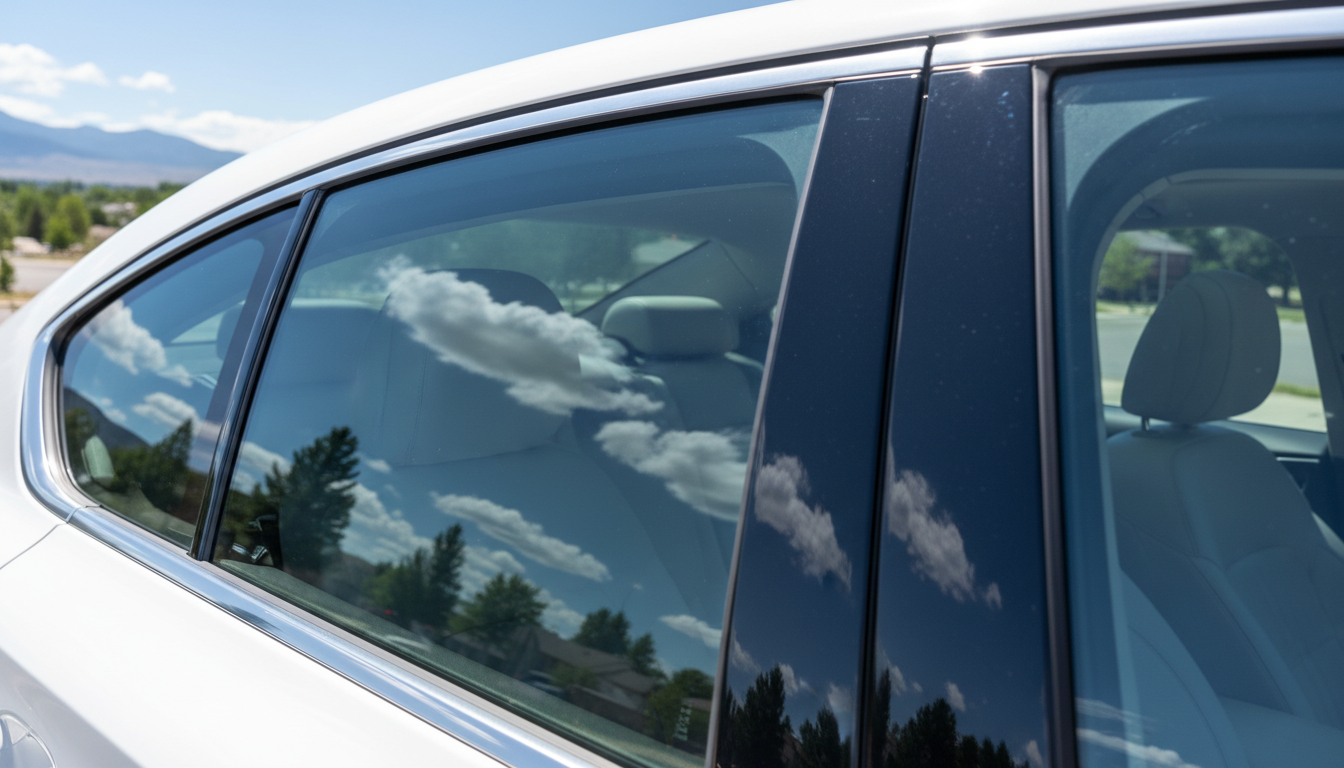
Ceramic window tint is a high-tech window film. It rejects heat and protects against UV rays. It uses nanotechnology to embed ceramic particles into the film.
This tint blocks more heat and UV rays than carbon tint. It keeps signals strong for gadgets better than carbon tint. It rejects heat over 50% and blocks up to 99% of UV rays.
Studies show ceramic tint can lower interior temperature by up to 10°F more on very hot days. This is compared to carbon tint.
Key Takeaways
- Ceramic window tint provides superior heat rejection and UV protection.
- It is made with nanotechnology, embedding ceramic particles into the film.
- Ceramic tint blocks more heat and UV rays than carbon tint.
- It keeps signals strong for gadgets better than carbon tint.
- Ceramic tint can lower interior temperature by up to 10°F more on very hot days.
For more information on the differences between ceramic and carbon tint, visit our article on ceramic vs carbon tint.
Understanding What Is Ceramic Window Tint
Ceramic window tint is a new technology that changes how we protect our cars from the sun. It’s different from old window tints because it blocks more heat and UV rays. This makes it a favorite among car owners.
This tint is great at keeping your car cool. It blocks infrared radiation, so your car stays cooler. This means you use less air conditioning and save on gas. It’s really helpful in the summer when it gets very hot inside your car.
Key Benefits of Ceramic Window Tint:
- Improved heat rejection
- Enhanced UV protection
- Reduced glare
- Preservation of vehicle interior
| Feature | Ceramic Tint | Regular Tint |
|---|---|---|
| Heat Rejection | Up to 80% | Up to 40% |
| UV Protection | Up to 99% | Up to 80% |
For more info on ceramic tint vs. other window films, check out this page.
The Science Behind Ceramic Window Film Technology
Ceramic window film works by blocking infrared radiation. This tech makes vehicles more comfortable and energy-efficient. It does this by keeping heat out of the car.
This film is filled with nano-ceramic particles. These tiny particles block infrared radiation. This is what stops heat from building up inside the car.
Nano-Ceramic Particles: The Key Component
Nano-ceramic particles are really small, under 100 nanometers. Their tiny size lets them spread evenly in the film. This creates a strong barrier against infrared radiation.
Using nano-ceramic particles in films is a big step up from old materials. Unlike other films, these don’t block GPS or cell phone signals. They also don’t affect how well you can see.
How Infrared Rejection Works
Infrared rejection is how ceramic films keep heat out of cars. The nano-ceramic particles absorb and reflect infrared radiation. This stops it from passing through the glass.
When sunlight hits the film, the particles soak up infrared radiation. This keeps the heat from getting into the car. The absorbed radiation is then released, reducing the heat inside.
| Technology | Infrared Rejection | Visible Light Transmission |
|---|---|---|
| Ceramic Window Film | Up to 90% | High |
| Metalized Window Film | Variable | Low to Medium |
| Dyed Window Film | Low | Low to Medium |
The table shows how ceramic film is better at blocking infrared. It also lets in a lot of visible light.
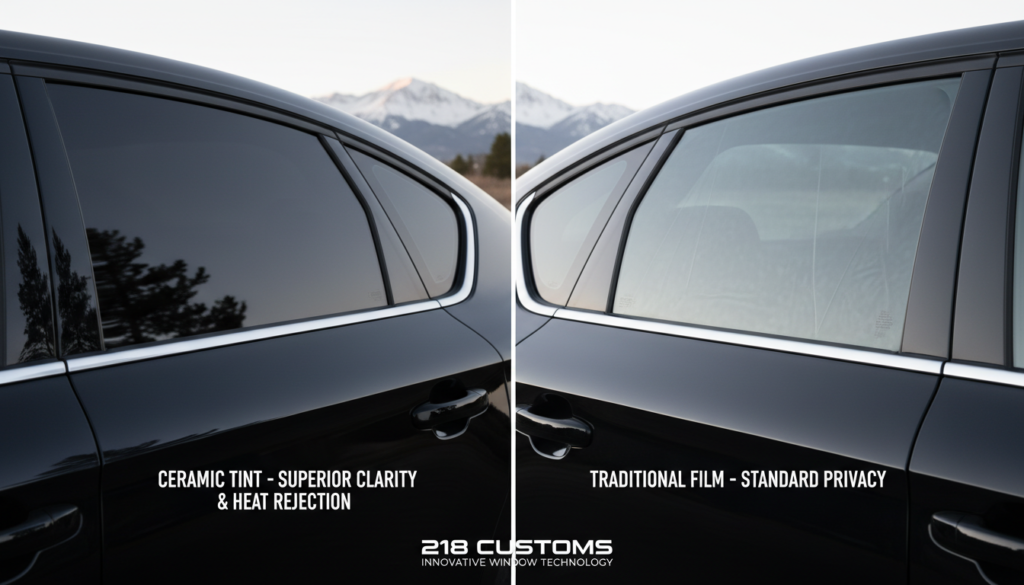
How Ceramic Window Tint Differs From Traditional Films
The world of window tinting has changed a lot. Ceramic window tint is now seen as a better choice than old types. These old tints have been around for years, but they have some downsides.
Dyed Window Tint
Dyed window tint is very common. It works by absorbing solar radiation with a dye. But, it can lose its color and effectiveness over time. Ceramic tint, on the other hand, stays good-looking and works well for longer.
Metalized Window Tint
Metalized tint uses metallic particles to block solar radiation. It’s better at keeping cool than dyed tint. But, it can mess with electronic signals and isn’t good for all cars. Ceramic tint doesn’t affect signals and blocks heat better.
Carbon Window Tint
Carbon tint is known for being tough and blocking infrared radiation. It does well, but ceramic tint is better in many ways. Ceramic tint beats it in heat rejection, UV protection, and how clear it stays.
The Heat Rejection Properties of Ceramic Tint
Ceramic window tint is known for its great heat rejection. It’s perfect for keeping your car cool. This technology blocks a lot of heat, so you don’t need to crank up the AC as much.
Total Solar Energy Rejected (TSER) Explained
Total Solar Energy Rejected (TSER) shows how much solar energy a tint can block. It includes infrared, visible light, and UV rays. Ceramic tints often reject up to 60% or more of solar energy.
This means your car stays cooler, even in direct sunlight. The TSER value shows how well a tint blocks heat. A higher TSER means your car stays cooler, which is great in hot weather.
Infrared Radiation Blocking Capabilities
Ceramic tints block infrared radiation well. Infrared radiation makes cars hot. Ceramic tints can block up to 99% of infrared radiation.
This keeps your car cooler and more comfortable. It also helps save fuel by reducing AC use.
Key Benefits of Ceramic Tint’s Heat Rejection Properties:
- Enhanced passenger comfort by maintaining a cooler interior
- Reduced reliance on air conditioning, leading to potential fuel savings
- Protection of interior components from heat damage
- Improved overall driving experience, even in hot weather
UV Protection Benefits for Vehicle Interiors
Ceramic window tint is known for protecting vehicle interiors from UV radiation harm. It helps reduce the damage UV rays cause to the inside of cars.
Preventing Interior Damage
UV rays are a big reason for interior fading and damage in cars. They can make upholstery fade, dashboards crack, and other parts wear out. Ceramic tint blocks up to 99.9% of UV rays, stopping this damage and keeping the interior looking and working great.
Health Benefits
Ceramic tint also protects people inside the car from UV radiation. Too much UV exposure can lead to skin cancer and cataracts. By cutting down UV exposure, ceramic tint makes the car a safer, healthier place for everyone.
Visual Clarity and Glare Reduction Advantages
Ceramic window tint uses advanced tech to give drivers better visual clarity and less glare. This makes driving safer, which is key during the day when sunlight can be very strong.
Driving Safety Improvements
Ceramic tint can cut glare by up to 90%. This boosts driving safety a lot. It helps drivers stay focused on the road, lowering accident risks.
To learn more about tint laws in your area, check out our guide on legal tint percentages.
Nighttime Visibility Considerations
Ceramic tint is great at reducing glare in the day but doesn’t mess with nighttime visibility. It’s made to keep the view clear at night, helping drivers see well in the dark. This is a big plus of ceramic tint.
In short, ceramic tint’s benefits make it a top pick for those wanting to improve their driving. Knowing what ceramic tint offers helps car owners choose the right tint for their needs.
The Professional Installation Process
A good ceramic tint job needs skill and detail. Professional installers make sure the tint works well and lasts long.
Pre-Installation Vehicle Preparation
Getting the vehicle ready is key before tinting. Clean windows are essential for the tint to stick well. Experts use special cleaners to make the surface perfect.
They also remove old films and check for damage. This ensures the new tint goes on smoothly.
Application Techniques for Optimal Results
Applying the tint needs precision. Pros use top-notch products and follow the maker’s rules for a perfect finish. They cut the tint to fit each window carefully.
They apply it to avoid bubbles and wrinkles. Their skill ensures the tint sticks well to the glass.
Curing Time and Post-Installation Care
After applying, the tint needs time to cure. This lets the adhesive bond strongly with the glass. It’s important to avoid cleaning or rolling down windows during this time.
After curing, gentle cleaning is best. Avoid harsh chemicals to keep the tint looking good for a long time.
Ceramic Tint Price Comparison
## Ceramic Tint Price Comparison
Ceramic window tint costs more than regular films but offers great value over time. The main reason is its advanced technology. This technology gives better heat blocking, UV protection, and glare reduction.
### Cost Factors That Influence Pricing
Several things affect ceramic tint prices. These include the quality of ceramic particles, film thickness, and the brand. High-end ceramic tints with nano-ceramic tech are pricier than basic ones.
### Long-Term Value vs. Initial Investment
The initial cost of ceramic tint is higher. But, its long-term benefits can save a lot. For example, it reduces heat, which can lower fuel use. It also protects against UV damage, keeping your car’s value up.
To show the cost difference, let’s look at a table:
| Window Tint Type | Average Price Range |
|---|---|
| Ceramic Window Tint | $200-$500 |
| Dyed Window Tint | $100-$300 |
| Metalized Window Tint | $150-$400 |
The table shows ceramic tint is more expensive than dyed and metalized ones. But, its durability and performance justify the cost for many.
In summary, ceramic window tint may cost more upfront. But, its long-term benefits make it a smart choice in the long run.
Best Ceramic Tint Brands on the Market
Many ceramic tint brands are out there, but some stand out for their quality and durability. When looking for ceramic window tint, focus on the top brands known for their premium products.
Premium Ceramic Film Options
Leading brands have spent a lot on research and development. This has led to high-performance ceramic films. LLumar and SunTek are well-known for their products that block heat, protect from UV rays, and are clear.
LLumar’s ceramic tint series uses advanced nano-ceramic technology. It rejects heat well without losing clarity. SunTek’s premium lines also reject infrared well and aim to improve the driving experience.
Performance Differences Between Brands
LLumar and SunTek both offer high-quality products, but they differ in performance. LLumar’s products are great at rejecting solar energy, keeping things cool inside. SunTek’s films are known for their clarity and blocking UV rays well.
| Brand | Heat Rejection | UV Protection | Clarity |
|---|---|---|---|
| LLumar | High | Excellent | Clear |
| SunTek | Very High | Excellent | Very Clear |
| Other Brands | Varies | Good to Excellent | Clear to Very Clear |
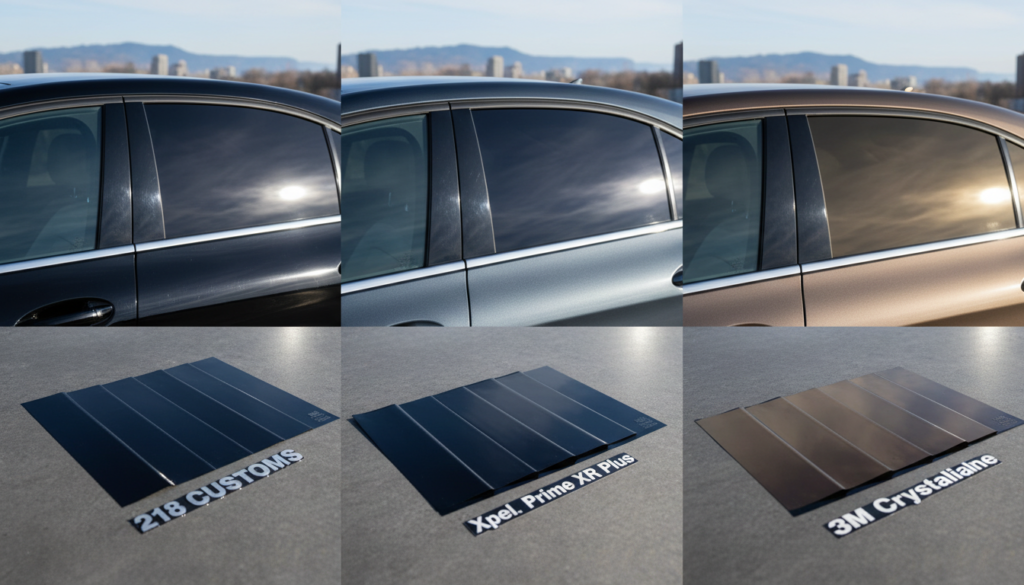
Choosing a ceramic tint brand depends on your needs, whether for a car or building. Knowing the differences in performance and benefits of each brand helps you make a better choice.
Longevity and Maintenance of Ceramic Window Tint
Ceramic window tint is very durable. Knowing how long it lasts is key to keeping it working well. Its lifespan depends on the tint’s quality, how it’s installed, and how well it’s cared for.
Expected Lifespan and Warranty Considerations
The life of ceramic window tint varies from 5 to 10 years or more. This depends on quality, installation, and care. High-quality tints usually have a warranty against peeling, bubbling, and fading.
When looking at ceramic tint durability, check the warranty. A longer warranty means the manufacturer is confident in its product’s lasting power.
Some top brands offer up to 10-year warranties. This shows their tint is very durable and performs well. It’s also key to know what the warranty covers and what might void it, like bad installation or care.
Proper Cleaning and Care Methods
Maintenance is vital for ceramic window tint’s long life. The right cleaning and care prevent damage and keep the tint working great. Here are some tips:
- Don’t use harsh chemicals or rough materials that can harm the tint.
- Clean with a mild soap and a soft cloth on tinted windows.
- Don’t roll down windows for a few days after tinting to let it cure.
- Check the tint often for any damage or wear.
For more on keeping ceramic window tint in good shape, check out this resource on its lifespan and care.
Knowing the expected lifespan and following the right maintenance practices will keep your ceramic window tint working well for years. Regular care and checking the tint’s condition will keep it looking and working great.
Conclusion: Is Ceramic Window Tint Worth the Investment?
Ceramic window tint is a top pick for car owners wanting to make their drive better and keep their car’s inside safe. It uses advanced tech to block heat, protect from UV rays, and cut down on glare. This makes it a great choice.
Looking at ceramic tint vs regular tint, ceramic stands out. It blocks more heat, keeping your car cooler. It also protects against UV rays, which helps keep your car’s inside looking new and valuable.
Ceramic tint isn’t just about function. It also looks good and cuts down on glare. While it costs more at first, its lasting quality and benefits make it a smart buy for car owners.
In short, ceramic window tint is a smart choice for anyone wanting to make their car more comfortable, look better, and keep its value up. Its many benefits, lasting quality, and long-term value make it a great option.
## FAQ
### Q: What is ceramic window tint and how does it work?
A: Ceramic window tint is a high-tech film that blocks heat and UV rays. It uses tiny ceramic particles to absorb infrared radiation. This reduces the heat that gets into your car.
### Q: How does ceramic window tint differ from traditional films?
A: Ceramic tint is better than old films like dyed, metalized, and carbon because it rejects heat and UV rays. It’s a top choice for car owners.
### Q: What are the benefits of ceramic window tint’s heat rejection properties?
A: Ceramic tint keeps your car cool, saving on air conditioning and fuel. It also stops UV damage and fading inside your car.
### Q: How does ceramic window tint protect against UV radiation?
A: It blocks up to 99% of UV rays. This protects people inside from UV harm and stops fading and damage.
### Q: What are the visual clarity and glare reduction advantages of ceramic tint?
A: Ceramic tint makes driving safer by cutting down glare and improving visibility at night. It also reduces eye strain and makes driving more comfortable.
### Q: How is ceramic tint installed?
A: A pro installs ceramic tint. They prepare your car, apply the tint, and take care of it after to get the best results.
### Q: What is the price of ceramic tint compared to other window films?
A: Ceramic tint costs more than other films. But, its long-term benefits and savings make it a good investment for car owners.
### Q: What are the best ceramic tint brands on the market?
A: Top ceramic tint brands offer high-quality products with advanced features. They provide the best performance and benefits.
### Q: How long does ceramic window tint last?
A: Ceramic tint lasts many years with the right care. Some brands even offer 10-year or more warranties.
### Q: How do I clean and maintain ceramic window tint?
A: Clean ceramic tint with mild soap and water. Avoid harsh chemicals or rough materials that can harm the film.
### Q: Is ceramic window tint worth the investment?
A: Yes, ceramic tint is a smart choice for those who want to protect their car’s interior. It improves driving, offers long-term savings, and is worth the cost.