
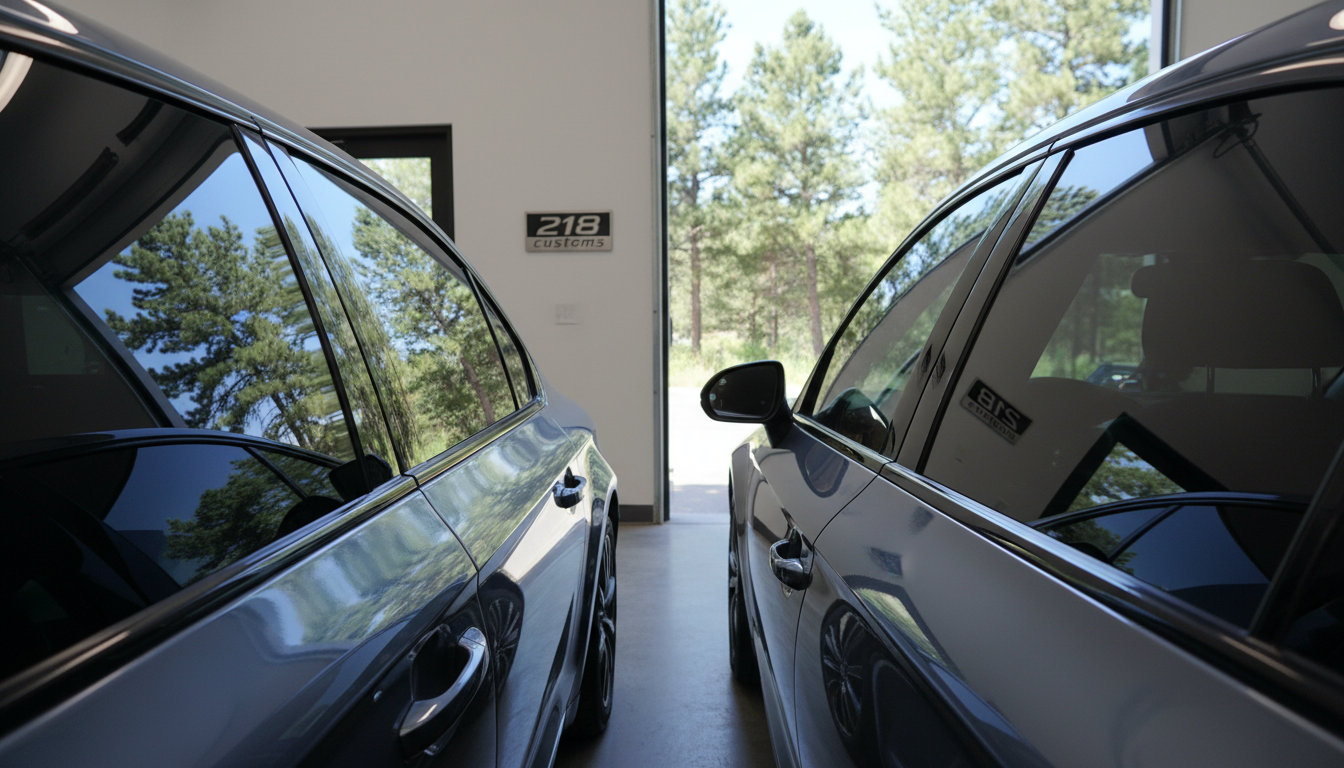
Choosing the right window tint for your car can be tough with so many options. Two top picks are ceramic window tint and carbon window tint. Each has its own benefits, fitting different needs and tastes.
Ceramic tint stands out for its top-notch heat blocking and UV protection. It’s a high-end choice. Carbon tint, by contrast, is more budget-friendly but still blocks heat well. Knowing the differences helps you make a smart choice.
Key Takeaways
- Ceramic tint offers superior heat rejection and UV protection.
- Carbon tint is a more affordable alternative with good heat rejection.
- The choice between ceramic and carbon tint depends on your specific needs and budget.
- Ceramic tint is made using nano-ceramic technology, while carbon tint uses carbon particles.
- Both types of tint have their unique benefits and drawbacks.
Understanding Window Tinting Basics
Window tinting is a popular way to make driving more comfortable and vehicles look better. It involves putting a thin film on car windows. This film helps block heat, UV rays, and glare, making driving better and protecting the car’s inside.
What is Window Tinting?
Window tinting means applying a thin film to car windows. This film blocks heat, UV rays, and glare. It makes driving more comfortable and keeps the car’s interior safe.
Why People Choose to Tint Their Windows
Many people tint their windows for good reasons. They want to keep the car cool, protect the interior from UV damage, and reduce glare. Tinting also makes the car look sleeker and more personal.
Evolution of Window Tinting Technology
Window tinting technology has changed a lot over time. Old tints were just dyed films that offered basic UV protection. Now, tints use advanced materials like ceramic and carbon. These offer better heat rejection, UV protection, and last longer.
Common Types of Window Tint
There are many types of window tint out there. Each has its own features. Dyed tints are basic but not very effective. Metalized tints block more heat because of their metallic content. Carbon tints have a matte look and block heat well. Ceramic tints are the best, offering top heat rejection and UV protection without metals.
What is Ceramic Tint?
Ceramic tint is a top-notch window tinting technology. It rejects heat and protects from UV rays better than others. Made with nano-ceramic tech, it’s non-conductive and non-metallic. This makes it perfect for those wanting the best results.
Composition and Technology
Ceramic tint uses advanced nano-ceramic particles. These particles are almost invisible, giving the tint a nearly clear look. It also doesn’t block electronic signals, so your GPS and phone work fine.
How Ceramic Tint is Manufactured
The making of ceramic tint is a complex process. First, nano-ceramic particles are mixed to get the right properties. Then, they’re added to a top-notch adhesive. This ensures the tint works well everywhere.
Key Characteristics of Ceramic Tint
Ceramic tint has some standout features. It’s great at blocking heat and UV rays. It also doesn’t mess with electronic signals. Plus, it looks good without being too obvious.
- Excellent heat rejection capabilities
- High UV protection
- Non-interference with electronic signals
- Aesthetic appeal without visible tint
How Ceramic Tint Blocks Heat and UV Rays
Ceramic tint blocks heat and UV rays with its nano-ceramic particles. These particles soak up and spread out heat, keeping it out of your car. It also protects the inside from UV damage and fading.
Knowing how ceramic tint is made and what it does shows why it’s a top choice. It blocks heat and UV rays while keeping your devices working. This makes it perfect for those who want both performance and convenience.
What is Carbon Tint?
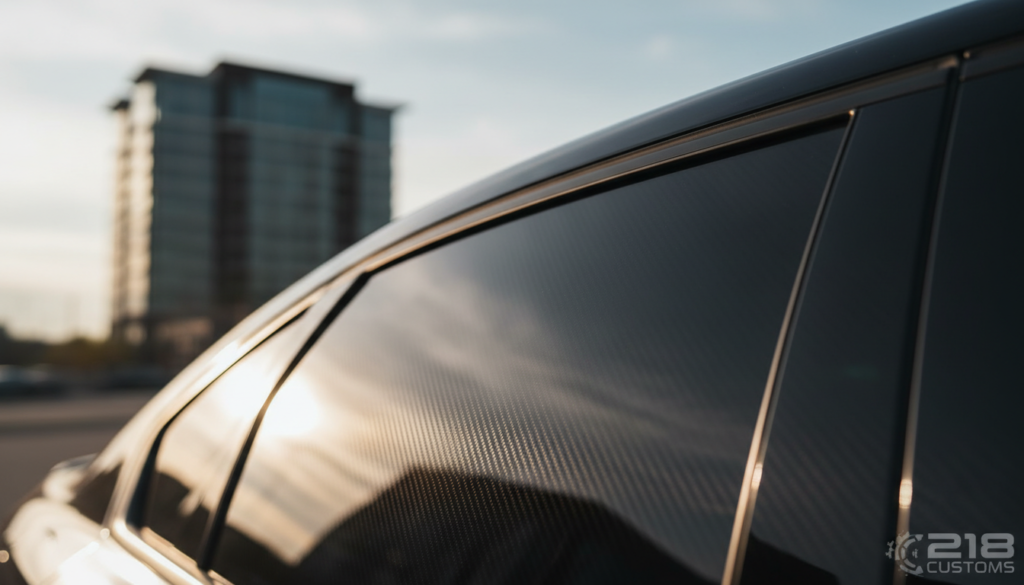
Carbon tint is made with carbon particles. It’s cheaper than ceramic tint but still blocks heat and UV rays well. It also has a unique matte look because of the carbon particles.
Composition and Technology
Carbon tint mixes carbon particles into the film. This gives it a darker or slightly tinted look. It’s a favorite among car owners. The carbon particles also help block heat and UV rays.
How Carbon Tint is Manufactured
Making carbon tint involves several steps. First, they pick high-quality materials. Then, they mix the carbon particles into the film carefully. This makes sure the tint looks and performs well.
Key Characteristics of Carbon Tint
Carbon tint has many carbon tint advantages. It blocks heat and UV rays well. It also looks unique, which many people like. For more info on carbon tint vs. ceramic tint, check out this page.
Carbon Particles and Their Function
The carbon particles in carbon tint are key to its success. They absorb and spread out heat. This keeps the car cooler and reduces AC strain.
Ceramic Tint vs Carbon Tint: Key Differences
It’s important to know the differences between ceramic and carbon tint. Each type has its own benefits and drawbacks.
Material Composition Comparison
Ceramic tint is made from ceramic particles. These particles are non-metallic and non-conductive. This makes ceramic tint great at blocking heat and UV rays. Carbon tint, on the other hand, is made from carbon particles in an adhesive. While it also blocks heat, ceramic tint does it better.
Manufacturing Process Differences
The way ceramic and carbon tint are made is different. Ceramic tint uses advanced technology to embed ceramic particles. Carbon tint disperses carbon particles in an adhesive. This difference affects their performance and how long they last.
Visual Appearance Differences
Ceramic tint looks more neutral than carbon tint. Carbon tint might look darker or more reflective. Your choice depends on what you prefer for your vehicle’s look.
Performance Comparison
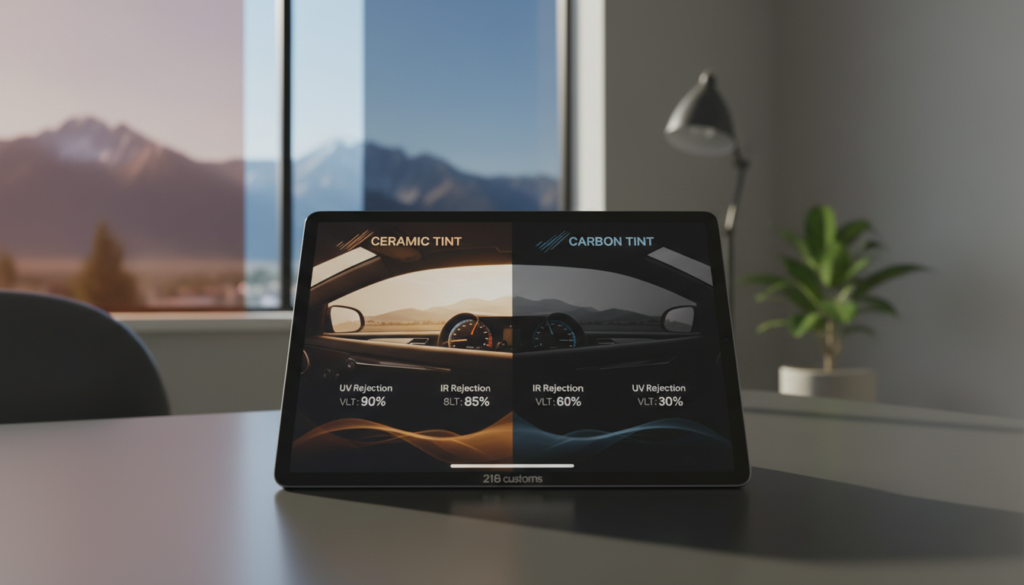
Ceramic tint is better at blocking heat and UV rays than carbon tint. If you want the best protection from the sun, go for ceramic tint. For more info on legal tint percentages, check out https://218customs.com/legal-tint-percentages-whats-allowed-in-your-state/.
| Feature | Ceramic Tint | Carbon Tint |
|---|---|---|
| Heat Rejection | Excellent | Good |
| UV Protection | Excellent | Good |
| Visual Appearance | Neutral | Dark/Slightly Reflective |
In conclusion, ceramic tint is better for blocking heat and UV rays. Choose based on your needs and what you like.
Heat Rejection Performance
Window tint’s ability to reject heat is crucial, mainly for those in hot climates. It greatly affects your vehicle’s comfort and energy use.
How Ceramic Tint Blocks Heat
Ceramic tint uses advanced tech to block a lot of heat. It has ceramic particles that stop infrared radiation well. This keeps your car’s inside cooler.
How Carbon Tint Blocks Heat
Carbon tint uses carbon particles to absorb and spread out heat. It works, but not as well as ceramic tint.
Comparative Heat Rejection Efficiency
Ceramic tint beats carbon tint in heat blocking. Its tech and materials make it better.
Infrared Rejection Capabilities
Ceramic tint blocks up to 99% of infrared rays. This is key for a cooler car interior.
Impact on Vehicle Interior Temperature
Window tint’s heat rejection affects your car’s inside temperature. Ceramic tint keeps it cooler, more so in summer.
| Tint Type | Heat Rejection Efficiency | Infrared Rejection |
|---|---|---|
| Ceramic Tint | High | Up to 99% |
| Carbon Tint | Moderate | Lower than Ceramic |
A leading maker says, “Ceramic window tints block heat and UV rays well. They’re great for comfort and protection.”
UV Protection Capabilities
Protecting your vehicle’s interior and occupants from UV radiation is key. Both ceramic and carbon tints have their own strengths. Knowing how they block UV rays is important.
Ceramic Tint UV Blocking
Ceramic tint is top-notch at blocking UV rays. It can stop up to 99% of them. This means it offers great protection against the sun’s harmful effects.
Carbon Tint UV Blocking
Carbon tint is good at cutting down heat and glare. But, it doesn’t block UV rays as well as ceramic tint. It usually blocks 50-70% of UV rays.
Long-term UV Protection Differences
The difference in UV protection between ceramic and carbon tint is big. Ceramic tint keeps blocking UV rays for a long time.
“The right window tint can make a big difference in protecting your vehicle’s interior and your health,” says a leading expert.
Interior Protection Benefits
Using a UV-protective window tint has big benefits for your vehicle’s interior. It stops early aging and keeps your car’s value up.
Health Protection Considerations
UV protection is key for your health and well-being. Too much UV exposure can harm your skin and raise your risk of skin cancer.
For more info on window tinting options, visit https://218customs.com/window-tinting-2/.
Durability and Longevity
Durability and longevity are key when choosing a window tint. Knowing how long ceramic and carbon tints last helps you decide. Factors like quality and environment play a big role.
Lifespan of Ceramic Tint
Ceramic tint is very durable. It can last up to 10 years or more. This depends on the tint’s quality and where it’s used.
The tech behind ceramic tint keeps it working well for a long time.
Lifespan of Carbon Tint
Carbon tint is also durable but doesn’t last as long as ceramic. It can last 5 to 7 years. This depends on its quality and the environment.
How well carbon tint is made affects its durability.
Factors Affecting Tint Durability
Many things can change how long a tint lasts. These include:
- Exposure to sunlight and UV rays
- Temperature changes
- How well it’s installed
- How you clean and maintain it
Maintenance Requirements
Keeping your tint clean is important. Use the right cleaners and avoid harsh chemicals. Don’t use things that can scratch the tint.
| Tint Type | Average Lifespan | Maintenance Requirements |
|---|---|---|
| Ceramic Tint | 10+ years | Regular cleaning with mild soap |
| Carbon Tint | 5-7 years | Regular cleaning with mild soap |
In summary, ceramic tint lasts longer and resists wear better. Knowing what affects tint durability and keeping it clean can make it last longer.
Clarity and Visibility
Window tinting is all about clarity and visibility, key for drivers. Ceramic tint stands out for its clear view, thanks to advanced tech. It offers great heat and UV protection without compromising on visibility.
Ceramic Tint Characteristics
Ceramic tint is known for excellent visibility. Its non-metallic design doesn’t block electronic signals or views. It’s perfect for those who need a clear view, day or night.
Carbon Tint Visibility Characteristics
Carbon tint might cut down on visibility if not applied right. Yet, top-notch carbon tint can still offer good sight while adding a unique look.
Night Driving Considerations
For clear views at night, ceramic tint is the best choice. Its clarity shines through even in dim light.
Glare Reduction Comparison
Ceramic tint beats others in reducing glare. Its tech makes it ideal for driving in bright sun.
Color Stability Over Time
Ceramic tint keeps its color over time, ensuring lasting visibility. Carbon tint is durable but might not hold its color as well.
Electronic Device Compatibility
It’s important to know how window tint affects electronic signals. Ceramic and carbon tints work differently with devices.
Impact on GPS and Navigation Signals
Ceramic tint doesn’t mess with GPS signals. But, some carbon tints might because of their makeup.
Cell Phone Reception Considerations
Ceramic tint keeps signals strong. Carbon tint might slightly block cell phone signals, but it’s usually not a big deal.
| Tint Type | GPS Signal | Cell Phone Reception |
|---|---|---|
| Ceramic Tint | No Interference | Minimal Impact |
| Carbon Tint | Potential Interference | Some Interference |
Radio and Satellite Radio Performance
Both tints barely affect radio and satellite signals. But, how much it affects you depends on the tint and your car.
Electronic Toll Collection Systems
Ceramic tint is better for avoiding toll system issues. It’s because it’s not made of metal.
When thinking about tinting your windows, talk to a pro. They can tell you how it might affect your devices. Learn more about tinting and its effects on electronic devices.
Installation Considerations
Installing ceramic or carbon tint on your car’s windows needs careful thought. This ensures a good and lasting job.
Ceramic Tint Installation Process
The ceramic tint installation starts with a clean window. This removes dirt and debris. Then, the tint is applied carefully to avoid bubbles or wrinkles.
Carbon Tint Installation Process
Installing carbon tint is similar but requires even more detail. The window is cleaned, and the tint is applied with precision. The exact steps can change based on the product and the installer’s skill.
Professional vs DIY Installation
While you can try DIY kits, getting a pro is best for both ceramic and carbon tint. Experts have the right tools and know-how for a perfect job. This reduces the chance of mistakes like bubbles or tint that’s not straight.
Curing Time and Post-Installation Care
After putting on the tint, let it cure correctly. This means not rolling down the windows for a while. Taking good care of the tint during and after curing helps it last longer.
Legal Considerations and VLT Percentages
Knowing the laws about tinting windows in your area is key. This includes the Visible Light Transmission (VLT) percentages. It’s important to pick a tint that meets local rules to avoid legal trouble.
Conclusion: Choosing Between Ceramic and Carbon Tint
Choosing between ceramic and carbon tint for your car windows depends on what you need. Ceramic tint is top-notch, offering great heat rejection and UV protection. It’s perfect for those seeking the best performance.
Carbon tint, on the other hand, is more affordable. It still provides good heat rejection and UV protection. This makes it a great choice for those watching their budget.
So, what’s the best choice for you? If you want the best heat rejection and UV protection, go for ceramic tint. But if you’re looking for a budget-friendly option that still performs well, carbon tint is a good pick.
Ultimately, the decision comes down to your needs and budget. By weighing factors like heat rejection, UV protection, and cost, you can make the right choice. This ensures you get the best tint for your car windows.
## FAQ
### Q: What is the main difference between ceramic tint and carbon tint?
### A: Ceramic tint is a premium choice that blocks more heat and UV rays. Carbon tint is cheaper but still offers good protection.
### Q: How does ceramic tint block heat and UV rays?
### A: Ceramic tint uses special nano-ceramic technology. It’s non-conductive to heat and non-metallic, making it great at blocking heat and UV rays.
### Q: Is carbon tint a good alternative to ceramic tint?
### A: Yes, carbon tint is a good choice. It blocks heat and UV rays well and is cheaper than ceramic.
### Q: What is the expected lifespan of ceramic tint?
### A: Ceramic tint lasts longer than carbon tint. It’s a more durable option.
### Q: What are the key characteristics of ceramic tint?
### A: Ceramic tint is known for its excellent heat rejection, UV protection, and clarity. It’s a premium choice for window tinting.
### Q: How does carbon tint affect the appearance of my vehicle?
### A: Carbon tint gives your vehicle a unique matte look. It’s a stylish and distinctive choice.
### Q: Can I install ceramic or carbon tint myself?
### A: While you can install tint yourself, it’s best to have a professional do it. They ensure proper application and avoid issues.
### Q: Will ceramic or carbon tint interfere with my GPS or cell phone signal?
### A: Ceramic tint is designed to keep signals strong. Carbon tint might interfere with electronic signals.
### Q: How do I maintain my ceramic or carbon tint?
### A: To keep your tint in good shape, avoid harsh chemicals and abrasive materials. Clean it regularly with mild soap and water.
### Q: What are the benefits of choosing ceramic tint over carbon tint?
### A: Ceramic tint offers better heat rejection, UV protection, and clarity. It’s a premium choice for top performance.
### Q: Is carbon tint a good option for those on a budget?
### A: Yes, carbon tint is a budget-friendly option. It provides good heat rejection and UV protection, making it a great choice for those on a budget.