
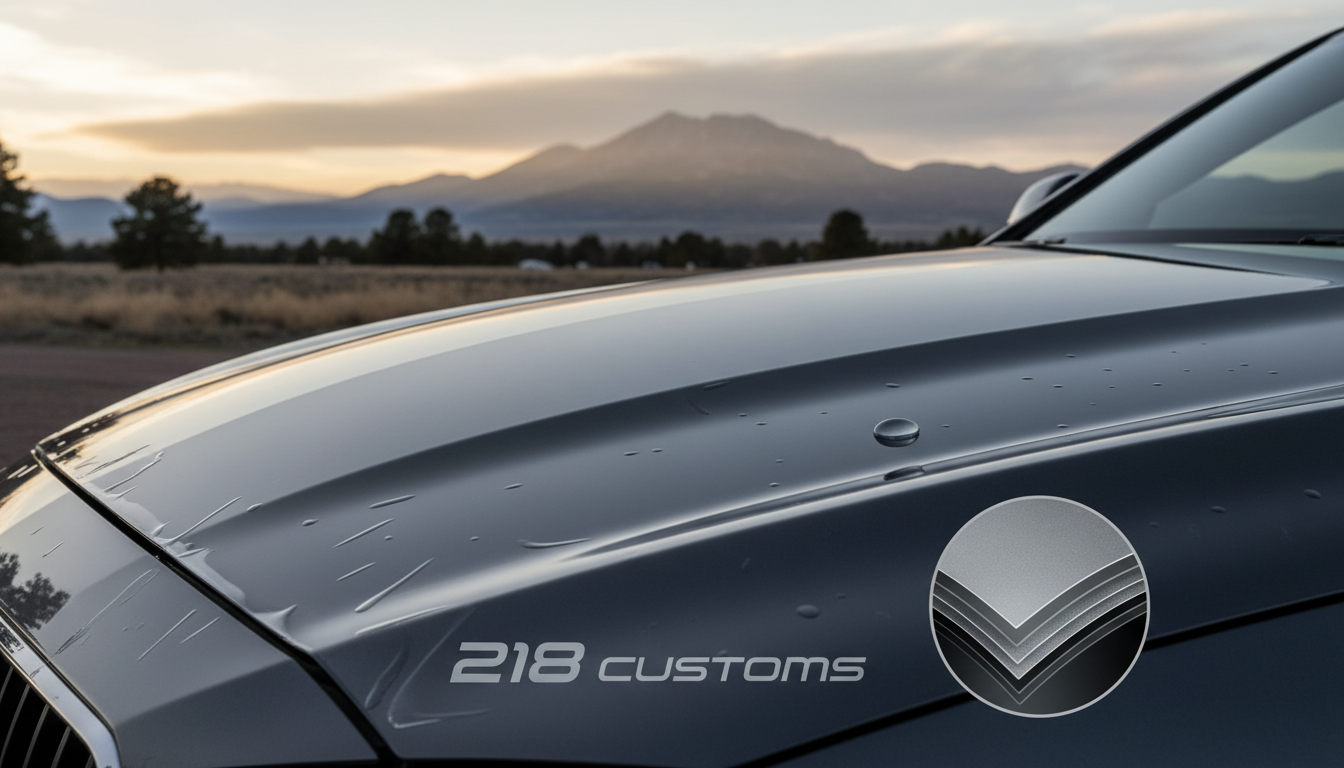
At 218 Customs, we aim to teach car owners about the latest protection methods. One key method is paint protection film (PPF). It’s a thin layer of polyurethane or polymer that guards a car’s clear coat and paint against many damages.
PPF is almost invisible, perfect for those who want to keep their car looking new. The top benefits of paint protection film include defense against UV rays, road debris, and small scratches.
Key Takeaways
- PPF is an ultra-thin layer that protects a car’s clear coat and paint.
- It provides protection against UV rays, road debris, and minor scratches.
- PPF is nearly invisible, maintaining the vehicle’s appearance.
- It’s a modern solution for vehicle owners to protect their cars.
- 218 Customs aims to educate vehicle owners on PPF and its advantages.
Understanding Paint Protection Film: A Modern Vehicle Defense System
Paint Protection Film (PPF) has changed how we protect our cars from road dangers. It started in the military to protect helicopter blades. Now, it’s a top choice for keeping cars safe.
The Evolution of Automotive Protection Solutions
PPF’s history began in the military, where it faced tough conditions. It then moved to cars, offering a strong shield against debris and dirt.
Thanks to new materials and methods, PPF is now thinner, stronger, and clear. It protects a car’s paint without changing its look.
How Paint Protection Film Is Manufactured
The making of PPF involves several steps:
- Material selection: Strong, flexible, and clear polyurethane or polyurea materials are picked.
- Coating: A release liner is added to make installation easy.
- Cutting: Special machines cut the film to fit cars perfectly.
- Quality control: The film is tested to ensure it’s durable and clear.
This process creates a protective film that lasts. It’s applied to cars to shield them from many dangers.
| Manufacturing Step | Description |
|---|---|
| Material Selection | High-quality polyurethane or polyurea materials are chosen. |
| Coating | The material is coated with a release liner. |
| Cutting | Advanced cutting technologies precision-cut the film. |
| Quality Control | Rigorous testing ensures high standards. |
What Does Paint Protection Film Protect Against: The Complete Overview
Paint Protection Film (PPF) shields your car’s paint from many dangers. It guards against road debris, environmental pollutants, and more. This layer is made to protect your car’s outside from harm.
Physical vs. Chemical Protection Properties
PPF has both physical and chemical protection. It acts as a shield against road debris and minor scratches. It also absorbs impact to reduce damage.
On the chemical side, PPF keeps your car’s paint safe from contaminants. It stops bird droppings, tree sap, and industrial fallout from damaging the paint. This keeps your car looking new.
| Protection Type | Description | Benefits |
|---|---|---|
| Physical Protection | Barrier against road debris, rock chips, and minor scratches | Minimizes damage from impacts, preserves paint |
| Chemical Protection | Resistant to contaminants like bird droppings and tree sap | Prevents etching and damage from chemical reactions |
Limitations of Paint Protection Film
PPF is very protective but not perfect. It can’t stop big impacts or deep scratches. It also doesn’t fix dents or deep gouges. Knowing its limits helps you keep your car looking great.
In summary, PPF is a smart choice for car owners. It protects your car’s paint from many dangers. Knowing what it can and can’t do helps you care for your vehicle better.
Rock Chips and Road Debris: The Primary Enemies
The open road can be tough, with debris and rock chips threatening your car’s paint. As you drive, your car faces risks from these hazards. Paint Protection Film (PPF) is key in protecting your vehicle from these dangers.
How PPF Absorbs and Disperses Impact Energy
PPF is made to soak up and spread out impact energy, keeping the paint safe. It has many layers that work together. These layers absorb the shock of rock chips and other debris.
For example, when a rock chip hits the PPF, the top layer takes the first hit. The layers below then spread out the energy. This stops it from reaching the paint. So, your car’s paint stays safe, even in tough road conditions.
Real-World Protection Against Highway Debris
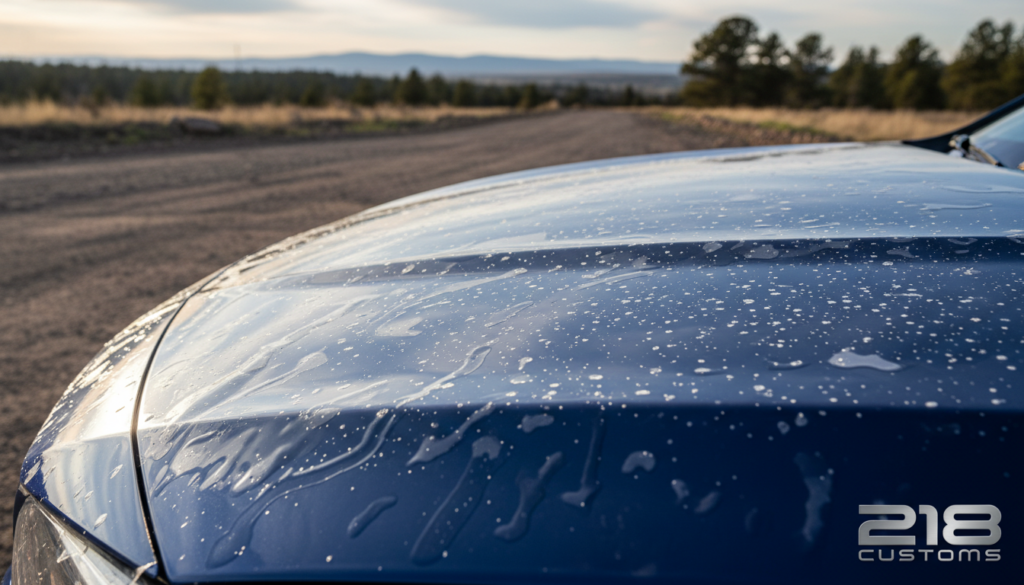
In real life, PPF really works well against highway debris. It stops loose stones or road debris from damaging your car’s paint. It acts as a shield, keeping your car’s paint safe.
If you want more protection, adding windshield protection film is a good idea. It gives your car extra defense against many dangers.
| Type of Debris | Potential Damage | PPF Protection |
|---|---|---|
| Rock Chips | Chips and cracks in paint | Highly effective in absorbing impact |
| Road Debris | Scratches and paint damage | Provides a strong barrier against debris |
| Highway Gravel | Chipping and paint wear | Disperses impact energy, protecting paint |
Environmental Contaminants and Chemical Protection
Environmental contaminants can harm your vehicle’s paint. Paint Protection Film (PPF) offers strong protection against these threats. Your car’s paint faces many dangers from the environment that can damage it over time.
Bird Droppings and Tree Sap
Bird droppings and tree sap can badly damage your car’s paint if not cleaned. Bird droppings have uric acid that can etch into the paint. Tree sap can stick to the paint and leave residue that harms the clear coat.
PPF acts as a shield against these contaminants. It makes cleaning your car easier and reduces damage risk. The film’s smooth surface stops bird droppings and tree sap from sticking to the paint, making them easy to wash off.
Acid Rain and Industrial Fallout
Acid rain and industrial fallout can also harm your car’s paint. Acid rain contains pollutants that can damage the paint. Industrial fallout can settle on the paint and cause harm if not cleaned properly.
PPF protects against these contaminants by creating a sacrificial layer. This layer absorbs the impact of harmful substances. If damaged, it can be replaced or repaired, keeping the paint safe.
Salt and Winter Road Treatments
In winter, roads are treated with salt and chemicals to improve traction. These substances can be corrosive to your car’s paint and undercarriage. PPF protects the paint from the damaging effects of salt and winter road treatments.
The table below shows the environmental contaminants PPF protects against and their effects on a vehicle’s paint:
| Contaminant | Potential Damage | PPF Protection |
|---|---|---|
| Bird Droppings | Etching, discoloration | Barrier against uric acid |
| Tree Sap | Adhesion, clear coat damage | Prevents sap from sticking to paint |
| Acid Rain | Surface damage, discoloration | Sacrificial layer absorbs acidic compounds |
| Salt and Winter Road Treatments | Corrosion, paint damage | Protects paint from corrosive substances |
UV Damage and Paint Protection Film
Paint Protection Film (PPF) does more than just protect against scratches. It also keeps your car’s paint safe from UV damage. The sun’s UV rays can harm your car’s exterior, causing paint to fade and discolor over time.
How PPF Blocks Harmful Rays
PPF uses advanced tech to block UV rays. This keeps your car’s paint looking good. Here’s how:
- Multi-layer construction: Its layers absorb and deflect UV rays.
- UV inhibitors: PPF contains UV inhibitors that prevent damage.
Long-Term Benefits for Paint Preservation
Using PPF has many benefits for your car’s paint. These include:
- Color retention: PPF keeps your car’s color bright.
- Reduced oxidation: It slows down paint deterioration.
- Enhanced durability: Your car’s paint stays vibrant longer.
Automotive experts say, “Using Paint Protection Film is a smart move. It keeps your car looking great and increases its value.” This shows why PPF is key to protecting your vehicle.
Scratch and Swirl Mark Resistance
Scratches and swirl marks are a big problem for car owners. But, self-healing Paint Protection Film has made a big difference. These marks are not just about looks; they can cause bigger issues if not fixed.
We’ll see how PPF, and self-healing types in particular, fights off these common problems.
Daily Driving Hazards
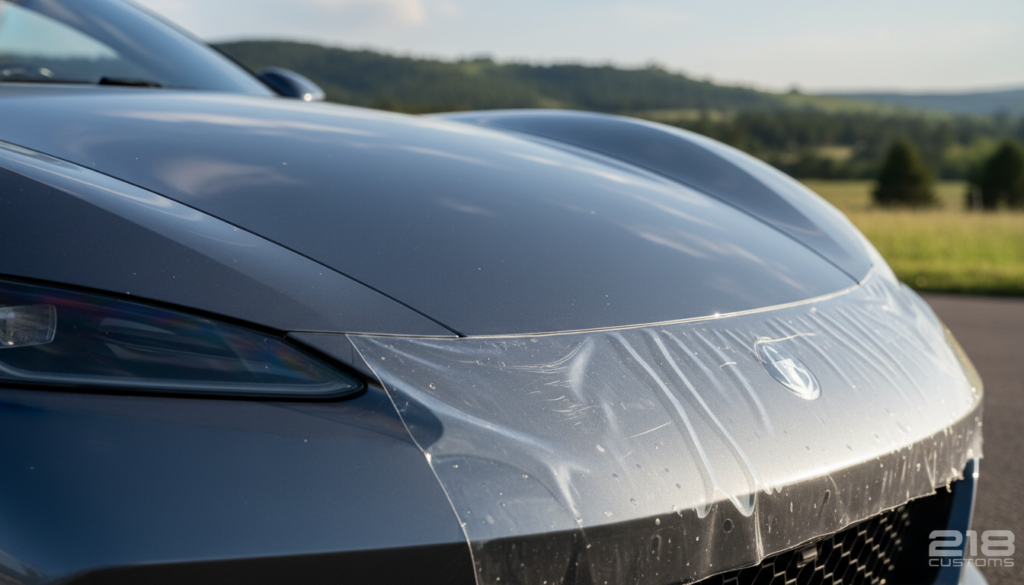
Driving every day puts cars at risk of scratches and swirl marks. Things like hitting branches or running into road debris are common. Self-healing PPF helps by creating a protective layer that can handle minor bumps and fix itself.
For example, if a car with self-healing PPF gets a small scratch, the film can fix it on its own. This keeps the car looking good and cuts down on the need for detailing or repairs.
Car Wash and Damage Prevention
Car washes are important for keeping cars clean, but they can sometimes cause damage. Self-healing PPF stops this by making the car’s surface smooth and less likely to get scratched.
Also, the self-healing PPF can fix minor scratches during washing, thanks to its special properties. Heat helps it heal even faster.
Self-Healing Properties Explained
Modern PPF’s self-healing is a big plus. It works because of a special topcoat that can fix itself after damage.
| Feature | Benefit |
|---|---|
| Self-Healing Topcoat | Automatically repairs minor scratches |
| Impact Resistance | Protects against road debris and other hazards |
| UV Protection | Prevents paint degradation from UV rays |
Experts say, “Self-healing PPF is a big step forward in car protection. It gives owners peace of mind and saves on maintenance costs.”
“The integration of self-healing technology in PPF represents a significant advancement in vehicle protection, offering car owners peace of mind and reduced maintenance costs.”
In short, self-healing Paint Protection Film is a strong shield against scratches and swirl marks. It makes a car’s paint last longer and look better. Knowing its benefits helps car owners protect their vehicles better.
Paint Protection Film Benefits Beyond Physical Protection
Paint Protection Film (PPF) is known for protecting cars from damage. But it does more than that. It also adds value, looks, and makes car care easier.
Maintaining Resale Value
PPF helps keep a car’s value high. It keeps the paint looking new, which is great for selling. A car that looks good sells for more.
Key factors that contribute to maintaining resale value include:
- Protection against rock chips and road debris
- Prevention of fading and discoloration due to UV exposure
- Resistance to chemical damage from contaminants like bird droppings and tree sap
| Feature | With PPF | Without PPF |
|---|---|---|
| Paint Condition After 5 Years | Excellent | Fair |
| Resale Value | Higher | Lower |
Aesthetic Preservation
PPF keeps a car’s paint looking good. It stops damage and fading. This is key for car lovers who care about looks.
The aesthetic benefits of PPF include:
- Maintaining the original paint color and finish
- Preventing swirl marks and minor scratches
- Enhancing the overall appearance of the vehicle
Reduced Maintenance Requirements
PPF also means less car care. It stops paint damage, so you don’t need to fix it as often. This saves time and money.
The benefits of reduced maintenance include:
- Less frequent washing and waxing
- Fewer repairs and touch-ups
- Lower overall maintenance costs
In short, PPF is more than just protection. It keeps your car’s value, looks, and care costs down. It’s a smart choice for car owners.
Maximizing Your PPF Investment
Keeping your vehicle’s PPF clean is more than a cosmetic task. It’s about making sure it lasts longer and works better. Taking good care of it is key to its longevity.
Proper Cleaning Techniques
Using the right cleaning methods is crucial for your PPF. Stay away from harsh chemicals and rough materials. Instead, use a gentle soap and water mix. Dry it with a microfiber cloth to avoid scratches.
Recommended Cleaning Products:
- Mild soap
- Microfiber cloths
- Soft-bristle brushes for tricky spots
Expected Lifespan and Replacement Indicators
The life of your PPF depends on several things. These include the film’s quality, the environment, and how well you care for it. A good PPF can last 5 to 10 years. Look out for signs like wear, yellowing, or if it starts to peel off.
| Lifespan Factors | Description |
|---|---|
| Quality of Film | High-quality films last longer |
| Environmental Conditions | Exposure to sunlight, rain, and extreme temperatures |
| Maintenance | Regular cleaning and avoiding harsh chemicals |
Professional vs. DIY Maintenance
DIY care can save money, but professional help is better. Experts know how to take care of your PPF. They can spot problems early and give it the special care it needs.
For more tips on PPF care and to find certified installers, visit https://218customs.com/find-paint-protection-film-near-you-best-installers-pricing/.
Conclusion: Investing in Your Vehicle’s Future
Investing in vehicle protection with Paint Protection Film (PPF) is smart for car owners. It keeps your car’s paint looking new and boosts its resale value. PPF’s self-healing feature fixes small scratches and swirls with just a bit of heat.
This makes it a great PPF investment for the long haul.
PPF also guards against environmental harm, rock chips, scratches, and UV damage. If you’re thinking about getting PPF, pick a trusted installer like 218 Customs. They’ll do it right.
Knowing the perks and upkeep of PPF means your car stays valuable. It’s a key part of keeping your vehicle safe and sound. This brings peace of mind and saves money in the long run.