
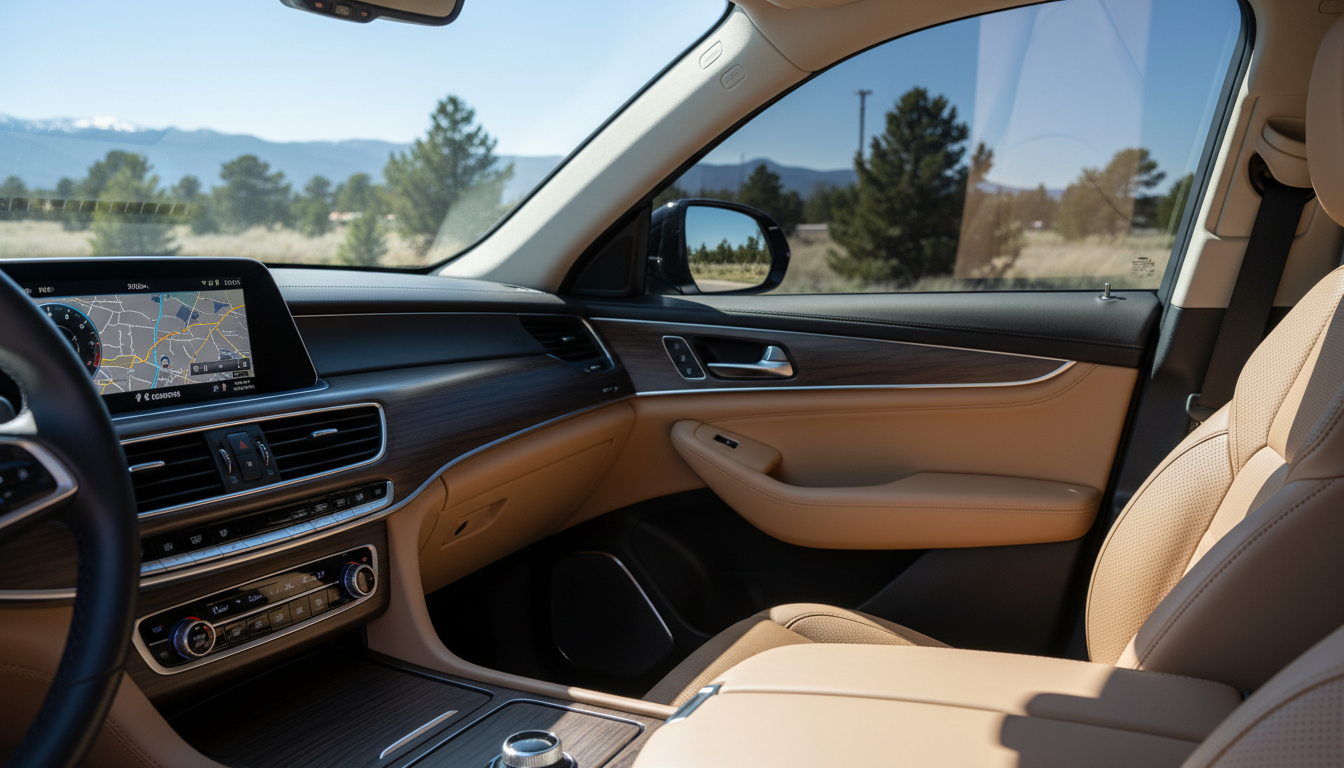
Keeping your vehicle’s interior condition in top shape is important. But, many people overlook how UV rays affect their car’s inside. Sunlight can damage your dashboard, seats, and other parts, causing them to fade and wear out.
Using a high-quality UV protective film can make a big difference. It blocks harmful UV rays, helping to keep your car’s interior looking new for longer. This way, your car stays in better condition for more years.
Key Takeaways
- UV rays can cause significant damage to your car’s interior surfaces.
- Applying a UV protective film can help preserve your vehicle’s interior.
- UV protection can reduce the fading of dashboard and seats.
- High-quality UV protection can extend the lifespan of your car’s interior.
- Protecting your car’s interior from UV rays is a simple and effective maintenance step.
The Hidden Threat to Your Vehicle’s Interior
Your vehicle’s interior faces many dangers, with UV radiation being a big one. You might know about sunlight’s damage outside, but its effects inside are just as bad.
Understanding UV Radiation and Interior Damage
UV radiation from sunlight can harm your car’s inside. It makes materials fade, crack, or get brittle. This not only makes your car look bad but also weakens its interior parts.
Common Signs of Sun-Damaged Interiors
Signs of sun damage include faded dashboard trim, cracked leather seats, and discolored fabric. Spotting these signs early helps protect your car’s inside. Regular checks and upkeep are crucial to keep your car’s interior in good shape.
The Science Behind Window Tint and Interior Fading Protection
Window tint protects your car’s interior from fading by blocking UV rays. It stops UV radiation from causing damage. This is key to keeping your car’s interior looking new.
How UV Rays Cause Material Degradation
UV rays can harm materials, leading to fading and damage. This not only makes your car look bad but also lowers its value.
The Composition of Quality Window Films
Good window films have special additives and tech. They help protect your car’s interior.
UV-Blocking Additives
UV-blocking additives are vital. They stop UV rays from getting through the film and harming your car’s interior.
Adhesive Technology
The adhesive in quality films makes sure they stick well to the window. This prevents bubbles and peeling.
| Feature | Benefit |
|---|---|
| UV-Blocking Additives | Prevents UV radiation from damaging the interior |
| Adhesive Technology | Ensures a strong, bubble-free bond between the film and window |
Types of Window Tint and Their Effectiveness Against Fading
It’s important to know about the different window tints to see how well they fight fading. Each type has its own strengths and ways to keep your car’s inside looking new.
Dyed Window Films
Dyed window films use a dye that soaks up sunlight and cuts down glare. They do a good job of blocking light, but they’re not as strong against UV rays and fading as others.
Metalized Window Tints
Metalized tints have tiny metal bits that bounce sunlight, including UV rays. This makes them better at stopping fading than dyed films. But, they might mess with electronic signals.
Carbon Window Films
Carbon films are tough and block a lot of infrared radiation, which helps prevent heat and fading. They balance UV protection with letting in some light.
Ceramic Window Tints
Ceramic tints are the latest and best, offering top-notch UV protection without metal. They’re great at stopping fading and also keep your car cool, making them a top pick.
Choosing the right tint is key to protecting your car’s interior from fading. Knowing what each type does helps you pick the best one for your car.
UV Rejection Rates: What the Numbers Mean for Your Interior
UV rejection rates tell us how well window tint keeps your car’s interior safe. It’s key to understand these numbers when picking a tint.
Understanding VLT (Visible Light Transmission)
Visible Light Transmission (VLT) shows how much light goes through the tint. It’s important to know VLT and UV rejection are different. VLT changes how dark your windows look, while UV rejection blocks harmful rays.
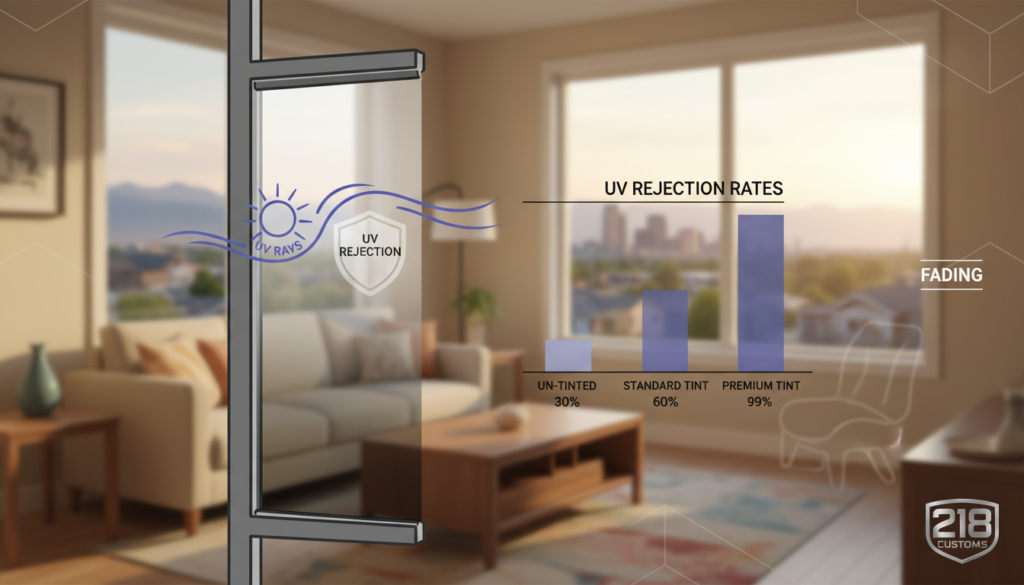
UV Rejection Percentages Explained
UV rejection percentages show how much UV radiation the tint blocks. A higher number means more protection. Good window tints block at least 99% of UV rays.
Infrared Rejection Measurements
Infrared rejection shows how well the tint keeps out heat. It’s linked to UV protection but is its own measure. It helps keep your car cool and your interior in good shape.
| Feature | Description | Benefit |
|---|---|---|
| VLT | Visible Light Transmission | Controls window darkness |
| UV Rejection | Blocks UV radiation | Protects against UV damage |
| Infrared Rejection | Blocks heat | Enhances comfort and interior preservation |
Beyond UV Protection: How Window Tint Blocks Infrared Heat
Window tint does more than just block UV rays. It also blocks infrared heat, which can damage your car’s interior. We’ll look at how heat affects fading, how to measure heat rejection, and the benefits of less heat inside.
Connection Between Heat and Interior Fading
Heat plays a big role in fading your car’s interior. High temperatures can make materials brittle and discolored. This is true for leather, fabric, and dashboard trim.
Window tint helps by blocking infrared heat. This keeps your car cooler, slowing down fading.
Measuring Heat Rejection Performance
Heat rejection is measured by the Solar Heat Gain Coefficient (SHGC) or Infrared Rejection (IRR) percentage. A lower SHGC or higher IRR means better heat blocking. Look for tints with high IRR percentages.
For example, some tints block up to 99% of infrared radiation. This greatly reduces heat inside your car.
Benefits of Reduced Heat Buildup
Less heat inside your car has many benefits. It slows down material degradation and keeps your car cooler. This makes driving more comfortable.
It also makes your car more energy-efficient. You’ll use your air conditioning less. Tints like ceramic or carbon are great at blocking heat.
Which Vehicle Interior Components Benefit Most from Window Tint
Window tinting does more than just keep your car cool. It also protects your car’s inside. Many parts inside your car can really benefit from this protection.
Dashboard and Instrument Panel Protection
The dashboard and instrument panel are very exposed. Window tint helps stop these parts from fading or cracking from UV rays. It keeps them looking and working great.
Leather and Fabric Upholstery Preservation
Leather and fabric seats can get damaged by the sun. Window tinting helps keep them looking good and feeling comfy for a long time. For more info on tint laws, check out 218customs.com.
Electronic Components and Displays
Today’s cars have lots of tech inside. These can get damaged by UV rays. Window tinting adds a shield to protect these systems.
Trim and Console Materials
Trim and console parts can also get hurt by UV rays. Window tint reduces UV exposure. This keeps these parts looking new for longer.
In short, window tinting protects many parts of your car’s interior. This includes the dashboard, seats, tech, and trim. Quality window tint can make your car’s inside last longer and look better.
Window Tint Installation: Real-World Results
Window tint really helps prevent interior fading in cars. It blocks harmful UV rays, keeping the inside parts from getting damaged. This helps keep your car looking good for a long time.
Before and After Comparisons
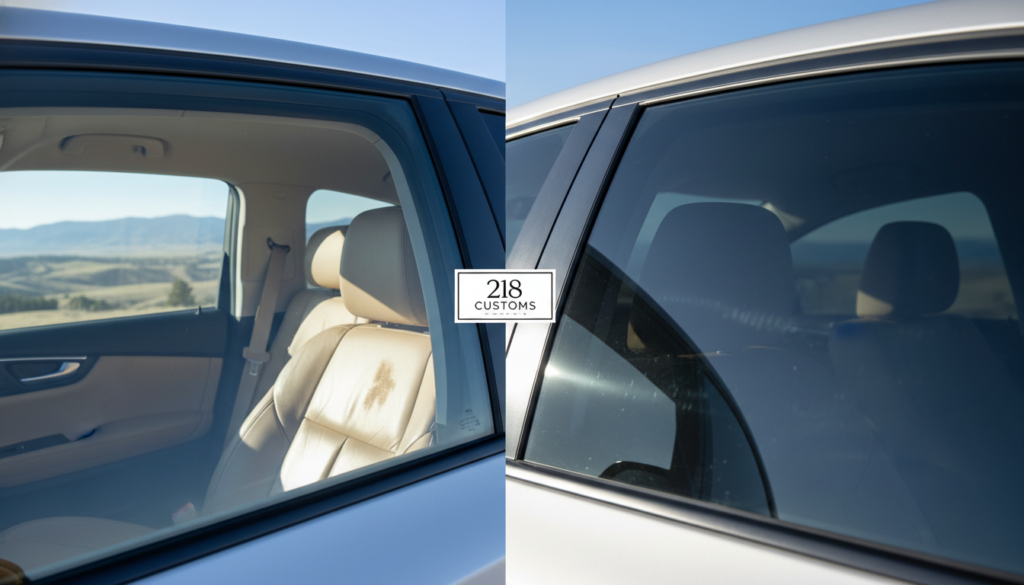
Seeing the difference before and after window tint is impressive. Cars with tint look much better than those without. Dashboards stay bright, leather doesn’t crack, and trim doesn’t fade early.
Key benefits observed in before and after comparisons include:
- Reduced fading of dashboard and trim components
- Preservation of leather and fabric upholstery
- Minimized degradation of electronic displays
Long-Term Protection Statistics
Research shows cars with good window tint last longer inside. Tint can cut down interior fading by up to 90%. This depends on the tint’s quality and how well it’s installed.
Long-term benefits of window tint include:
- Extended lifespan of interior components
- Reduced need for costly repairs or replacements
- Enhanced overall vehicle value
Customer Testimonials and Case Studies
What people say about window tint is very telling. Many car owners see less fading and better-looking interiors. This shows how effective window tint can be.
“Installing window tint on our fleet vehicles has been a game-changer. We’ve seen a dramatic reduction in interior damage, and our vehicles look newer for longer.”
Looking at real-world results, it’s clear window tint works well. It stops interior fading and keeps your car’s interior in great shape.
Common Misconceptions About Window Tint and Fading Protection
Many people don’t know the truth about window tint and fading protection. They think it does more than it actually does to protect their car’s interior from sun damage.
Factory Glass vs. Aftermarket Tint Protection
Some think factory glass is enough to block UV rays and prevent fading. But, most factory glass doesn’t block UV rays as well as aftermarket window tint. A study found that top-quality window films block up to 99% of UV rays, much more than standard factory glass.
A leading expert says, “Aftermarket window tint adds extra protection that factory glass can’t offer.”
Darkness Level and Protection Correlation
Many believe darker window tints offer more protection. But, the tint’s darkness doesn’t always mean better UV protection. The quality and type of film are more important. For example, some lighter, high-quality films protect better than darker, lower-quality ones.
For more details on window films and their effectiveness, check out this article.
Lifetime Expectations
Some think window tint lasts forever. But, it has a limited lifespan and can wear out over time. This is due to sunlight, weather, and other factors.
High-quality films are made to last longer. But, they still need care. A pro installer advises, “Keep it clean and avoid extreme temperatures to make your tint last longer.”
In summary, knowing the truth about window tint and fading protection helps car owners make better choices. By clearing up common myths, they can see the real benefits and limits of window tint.
Legal Considerations for Window Tinting
It’s important for car owners in the U.S. to know about window tinting laws. These laws change from state to state. So, it’s key to understand the rules in your area.
State-by-State VLT Requirements
The Visible Light Transmission (VLT) percentage is a big part of window tinting laws. It shows how much light can get through the window. States have different VLT rules for different windows.
For example, some states let you have a darker tint on rear windows than on the front windshield or side windows. Always check your state’s VLT rules to follow the law.
Medical Exemptions for Darker Tints
Some states let you have darker tints if you have a medical reason. You need a doctor’s note to get this exemption. Knowing how to get a medical exemption can help if you qualify.
Front Windshield Restrictions
Most states have strict rules for tinting the front windshield. You can usually only tint a small strip at the top. This is called the “sun strip” or “AS-1 line.” It’s important to know your state’s rules to avoid trouble.
Knowing these legal points helps car owners enjoy tinted windows while following the law.
Professional Installation vs. DIY: Impact on Fading Protection
Choosing between professional window tint installation and DIY kits affects how well your car’s interior stays protected from fading.
Quality Differences in Materials
Professional window tint installers use top-notch materials. These materials block UV rays better and reduce fading. They are also more durable and less likely to bubble or peel.
Installation Precision and Performance
A professional installation means the tint is applied perfectly. This avoids bubbles or creases that can harm its performance. This precision is key to making sure the tint works well.
Warranty Considerations
Professional installs usually come with a warranty. This gives you peace of mind and protects against defects or wear. DIY kits don’t offer warranties, so you’re on your own if problems arise.
In summary, while DIY kits might seem cheaper, professional installation is better. It offers better material quality, precise installation, and warranty coverage. This makes it a smart choice for protecting your car’s interior from fading.
Maintaining Your Window Tint
To keep your window tint working well, regular care is key. Taking good care of it helps it last longer and stay effective.
Proper Cleaning Techniques
Cleaning your window tint needs to be done right to avoid damage. Use a soft, microfiber cloth and a mild cleaning solution without ammonia or harsh chemicals. Don’t use paper towels or rough materials that can scratch the tint.
Signs Your Window Tint Needs Replacement
Window tint can wear out from UV rays, heat, and the environment. Look out for bubbling, peeling, or discoloration. If you see these, it’s time to get a new one.
Seasonal Maintenance Tips
| Season | Maintenance Tip |
|---|---|
| Summer | Regularly clean your windows to prevent dirt buildup. |
| Winter | Use a gentle ice scraper to remove ice without damaging the tint. |
| Spring/Fall | Inspect your tint for any signs of damage or deterioration. |
For more info on window tinting and its benefits, check out 218 Customs. They can help you explore your options.
Conclusion: Investing in Your Vehicle’s Long-Term Value
Choosing to tint your car windows is a smart move. It keeps your car’s interior looking new by blocking UV rays. This choice helps your car stay in great shape and look good for longer.
Good window tint does more than just block UV rays. It also keeps your car cooler by blocking infrared heat. This makes driving more comfortable. It also helps keep your car’s interior looking new, which adds to its value over time.
When picking a window tint, think about how well it blocks UV rays, its VLT, and what type of film you need. Getting it installed by a pro makes sure it works well and lasts long. This gives you peace of mind and keeps your car safe for years.
By picking the right tint and taking care of it, you’ll keep your car’s interior looking great. You’ll also enjoy a more comfortable ride. This makes your car a valuable investment for many years.