
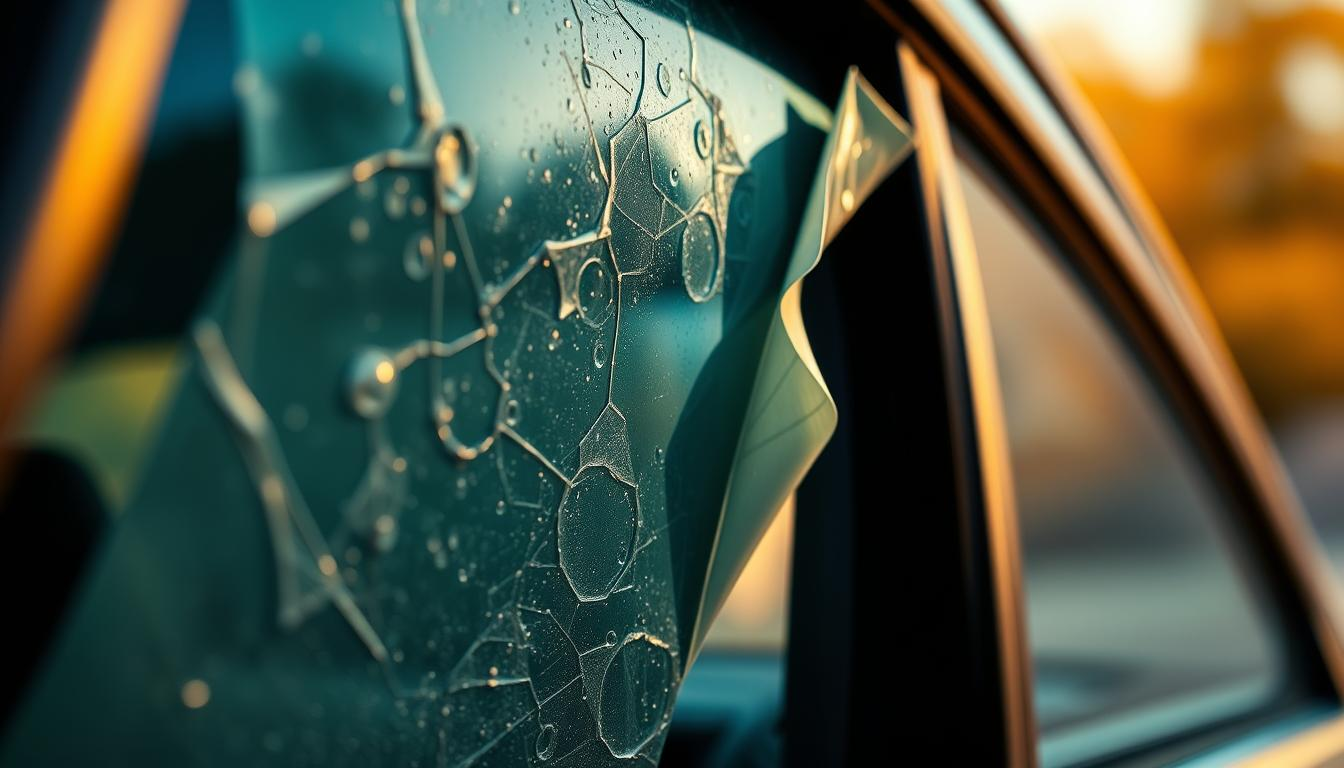
You put window tint on your car for less glare, more privacy, and style. But, it can peel or bubble over time. This makes it look bad and not work right. At 218 Customs in Lakewood, we help car owners with this problem.
Damaged window tint is annoying, but it can be fixed. If your tint is peeling or has bubbles, we can make it look new again. Our car care team will fix it right for you.
Key Takeaways
- Window tint damage is common and can be addressed.
- Peeling and bubbles can be repaired by professionals.
- 218 Customs offers expert window tint repair services.
- Restoring your window tint can enhance your vehicle’s appearance.
- Trust our team for a solution that meets your car care needs.
Understanding Window Tint Problems
If you own a vehicle or property, knowing about window tint issues is key. Damage to window tint can harm its look and how well it works.
Common Issues with Window Tint
Window tint problems can show up in different ways. The most common are bubbling and peeling.
Bubbling and Air Pockets
Bubbling happens when air gets trapped between the tint and the glass. This can be because of bad installation or the environment.
Peeling and Lifting Edges
Peeling and lifting edges are common too. They often come from using low-quality materials or bad installation.
Causes of Window Tint Damage
Knowing why window tint gets damaged helps prevent and fix it. Main causes are bad installation, the environment, and low-quality materials.
Poor Installation Techniques
Bad installation can cause many problems, like bubbling and peeling.
Environmental Factors
Extreme temperatures, UV rays, and moisture can also harm window tint.
Low-Quality Materials
Using cheap materials can make your window tint not last as long.
To show the common problems and why they happen, here’s a table:
| Issue | Cause | Effect |
|---|---|---|
| Bubbling | Poor installation, environmental factors | Aesthetic damage, compromised tint functionality |
| Peeling | Low-quality materials, poor installation | Tint failure, reduced UV protection |
By knowing these common problems and why they happen, you can avoid damage. This helps your tint last longer.
Signs Your Window Tint Needs Attention
Window tint problems can get worse fast if ignored. It’s important to spot signs early. Regular checks help keep your tint looking good.
Early Warning Signs of Tint Failure
Watch for visible bubbles, peeling edges, or scratches on the tint. These signs mean your tint needs fixing. Spotting problems early can prevent bigger, more expensive fixes later.
Assessing the Severity of Damage
Check how bad the damage is by seeing if bubbles or peeling spread. Knowing how serious the damage is is key for repairing tinted windows.
Timeline: When Minor Issues Become Major Problems
Small problems like tiny bubbles or slight peeling can turn into big issues. A small bubble can grow and make the tint peel off entirely. This means you’ll need a full tint film repair.
As a pro once said,
“A stitch in time saves nine.”
This saying is true for keeping your window tint in good shape.
Can Window Tint Be Repaired? The Truth About Fixing Damaged Tint
If your window tint is peeling or bubbling, you might wonder if it can be fixed. The answer depends on how bad the damage is. Sometimes, you can fix it, but not always.
Repairable Conditions
Some damage can be fixed. These include:
Small Bubbles and Minor Peeling
Small bubbles and minor peeling can often be fixed. Special techniques can make your tint look new again. You won’t need to replace it.
Scratches and Light Damage
Scratches and light damage might be buffed out or fixed. But, it depends on how bad it is and the tint’s quality.
When Replacement Is Your Only Option
Repair might not always work. Sometimes, you have to replace it.
Extensive Discoloration
If your tint is very discolored, it might not be fixable. Discoloration can happen from sunlight or aging.
Widespread Bubbling or Peeling
Big areas of bubbling or peeling mean the tint is failing. Trying to fix it might not save money or work well. So, replacing it is better.
Knowing if you can repair or need to replace your tint is key. Look at the damage and think about your options. This way, you can choose what’s best for you and your budget.
DIY Methods for Minor Tint Repairs
Fixing small window tint problems at home can save money. You can handle minor issues like small bubbles, scratches, or peeling edges. You just need the right tools and a bit of know-how.
Tools and Materials You’ll Need
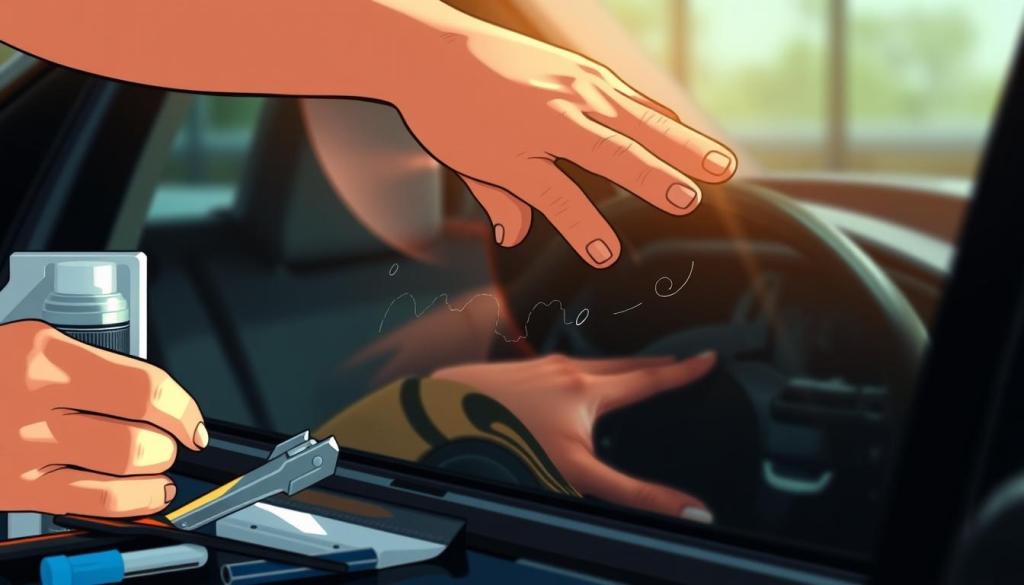
First, get your tools ready. You’ll need a heat gun or hair dryer, a credit card, and a razor blade. Also, have a new tint film on hand. Make sure your workspace is clean and well-lit.
Step-by-Step Repair Process
Start by cleaning the area well. For bubbles, heat the area with a heat gun or hair dryer. Then, use a credit card to smooth out the bubble from the center out.
For scratches or peeling edges, remove the bad part with a razor blade. Then, put in new tint film. Make sure the edge is smooth.
Safety Precautions During DIY Repairs
Always wear gloves and eye protection when using a heat gun or razor blade. Work in a place with good air flow to avoid inhaling fumes. Don’t overheat, as it can harm the window or other things nearby.
Limitations of Self-Repair Methods
DIY fixes work for small problems, but not for big ones. If there’s a lot of peeling or bubbling, you might need a pro. Getting a perfect finish can be hard without the right tools and skills. Know when to stop to avoid making things worse.
Fixing Bubbles in Window Tint
Bubbles in your window tint can be frustrating. But, you can fix them with the right techniques. Bubbles not only look bad but also affect how well your tint works.
Identifying Different Types of Bubbles
Before fixing bubbles, know what causes them. There are many types, each needing a special way to remove.
Water Bubbles vs. Air Bubbles
Water bubbles come from moisture trapped between the tint and glass. Air bubbles are from air pockets. Knowing the difference helps you remove them better.
Dirt and Contamination Bubbles
Dirt and contamination bubbles happen when debris gets stuck during tinting. These are hard to remove.
Techniques for Bubble Removal
After figuring out the bubble type, use the right removal method.
Heat Application Methods
Heat can help remove air and water bubbles. But, be careful not to damage the tint.
Needle and Adhesive Techniques
For tough bubbles, use a needle to pop them. Then, apply adhesive to fix it.
| Bubble Type | Removal Technique |
|---|---|
| Water Bubbles | Heat Application |
| Air Bubbles | Needle and Adhesive |
| Dirt and Contamination Bubbles | Needle and Adhesive |
Addressing Peeling Window Tint
Peeling window tint is a big problem for car owners. Knowing why it happens is the first step to fixing it. If you don’t fix it, it can get worse.
Why Tint Peels: Root Causes
It’s important to know why your tint peels. This helps you find the best way to fix it. Several things can cause it, like:
- Poor installation techniques
- Low-quality tint material
- Exposure to extreme temperatures
- Use of inappropriate cleaning products
Methods to Fix Peeling Edges
Fixing peeling edges takes time and the right steps. For small peels, a heat gun can help stick it back. But for big damage, you might need to replace it.
| Method | Effectiveness | Difficulty Level |
|---|---|---|
| Using a heat gun | High | Moderate |
| Replacing the tint | Very High | High |
When Partial Replacement Is Necessary
Sometimes, you need to replace part of the tint. This is true if the peel is in one spot. Checking how bad the damage is helps decide if you need to replace just that part or the whole thing.
By knowing why it peels and fixing it right, you can make your tint look and work like new again.
Professional Window Tint Repair Services
Professional window tint repair services fix peeling and bubbling problems well. Choosing professional repair means you get quality and lasting results.
What to Expect from Professional Repair
Professional repair starts with checking the damage. Technicians look at the tint’s condition and find what needs fixing or replacing. They will tell you what work is needed and how much it will cost.
The Professional Repair Process
The first step is cleaning the window to get rid of dirt. Then, the techs use special tools to take off the bad tint without scratching the glass. For bubbles, they might use heat and pressure to fix it.
Average Costs and Timeframes
Repair costs vary by damage and car type. You might pay $50 to $200 on average. The repair time can be a few hours to a day, depending on the job.
Questions to Ask Your Tint Repair Specialist
Ask your repair expert about their experience and materials used. Also, ask about their warranty and how they handle unexpected problems during the repair.
Preventing Future Window Tint Damage
To keep your window tint looking good, you need to take care of it. Simple steps can make your tint last longer and stay in great shape.
Proper Maintenance Practices
Check your window tint often for any problems. Look for peeling, bubbling, or color changes. Fix these issues right away to avoid more damage.
Products to Avoid on Tinted Windows
Don’t use strong chemicals or rough cleaners on tinted windows. They can harm the tint. Use mild soap and water or tint-safe cleaners instead.
Optimal Cleaning Techniques
When cleaning tinted windows, use a soft cloth or microfiber. This helps avoid scratches. Clean gently, without moving in circles.
Seasonal Care Tips
- In winter, don’t use hot water on cold tinted windows to prevent cracking.
- In summer, park in shaded areas to reduce heat exposure.
- Regularly clean your windows to prevent dirt buildup.
Benefits of Quality Window Tint Installation
Getting a quality window tint is more than looks. It makes your car more comfortable and efficient. You get many benefits that make driving better.
How Premium Materials Prevent Common Issues
Premium tints don’t peel, bubble, or fade easily. They last longer and look great. This means your tint stays good for a long time.
Long-term Cost Benefits of Quality Tint
Quality tint costs more upfront. But it saves money in the long run. It lasts longer and uses less energy, saving you money.
Performance Advantages of Professional Installation
Getting it installed by pros makes it work better. They make sure it sticks right, has no bubbles, and fits perfectly. This makes your tint last longer and work better.
Why Choose 218 Customs for Your Window Tint Needs
218 Customs is a top choice for window tinting. They are known for their excellent service and quality. People trust them for their window tinting needs.
Expertise in Premium Window Tinting
218 Customs is all about premium window tinting. They use SunTek PPF for durability and performance. Their team is trained well to install it perfectly.
Specialization in SunTek PPF and Premium Products
218 Customs uses SunTek PPF and other top products. These materials protect your car from UV rays, heat, and glare. Your car stays cool and safe.
Skilled Technicians and Installation Process
At 218 Customs, they take installation seriously. Their experienced team makes sure the tint fits perfectly. They aim for the best finish.
Comprehensive Automotive Customization Services
218 Customs does more than tint windows. They also do vehicle wraps and paint protection. They have everything you need to enhance your car.
- Window Tinting
- Vehicle Wraps
- Paint Protection
End-to-End Solutions for Vehicle Enhancement
218 Customs offers complete car enhancement solutions. They help from start to finish. They work with you to meet your needs.
Serving the Lakewood and Denver Metro Area
218 Customs serves Lakewood and Denver Metro. They are known for being reliable and making customers happy. They know what their local clients need.
Customer Satisfaction and Testimonials
218 Customs’ customers love their work. They focus on making customers happy. They always try to do better and give great results.
When to Schedule a Window Tint Consultation
Knowing when to schedule a window tint consultation can save you time and money. If your window tint is giving you trouble, look for signs that mean you need a pro.
Signs It’s Time to Consult a Professional
Here are some signs you should get help:
- Visible bubbles or peeling edges on your window tint
- Persistent issues despite trying to fix it yourself
- Not sure about your window tint’s condition or quality
- Planning to sell your vehicle and want to improve its look
What to Prepare Before Your Appointment
To get the most from your consultation, prepare these things:
- A list of your concerns and questions about your window tint
- Photos or videos of the problems you’re facing
- Any important documents, like warranties or repair records
What to Ask During Your Consultation
Ask these questions during your meeting:
- What are the best ways to fix my window tint issues?
- What will it cost to fix or replace my tint?
- How can I keep my window tint in good shape?
Conclusion
Keeping your window tint in good shape is very important. Knowing how to fix common problems helps a lot. This way, your window tint will last longer.
At 218 Customs in Lakewood, they know a lot about window tinting. They can fix many issues, like peeling or bubbles. They make sure your car looks and works great.
For the best window tint service in Lakewood, go to 218 Customs. They offer great service and make sure you’re happy. Call them to find out how they can help your car’s window tint.