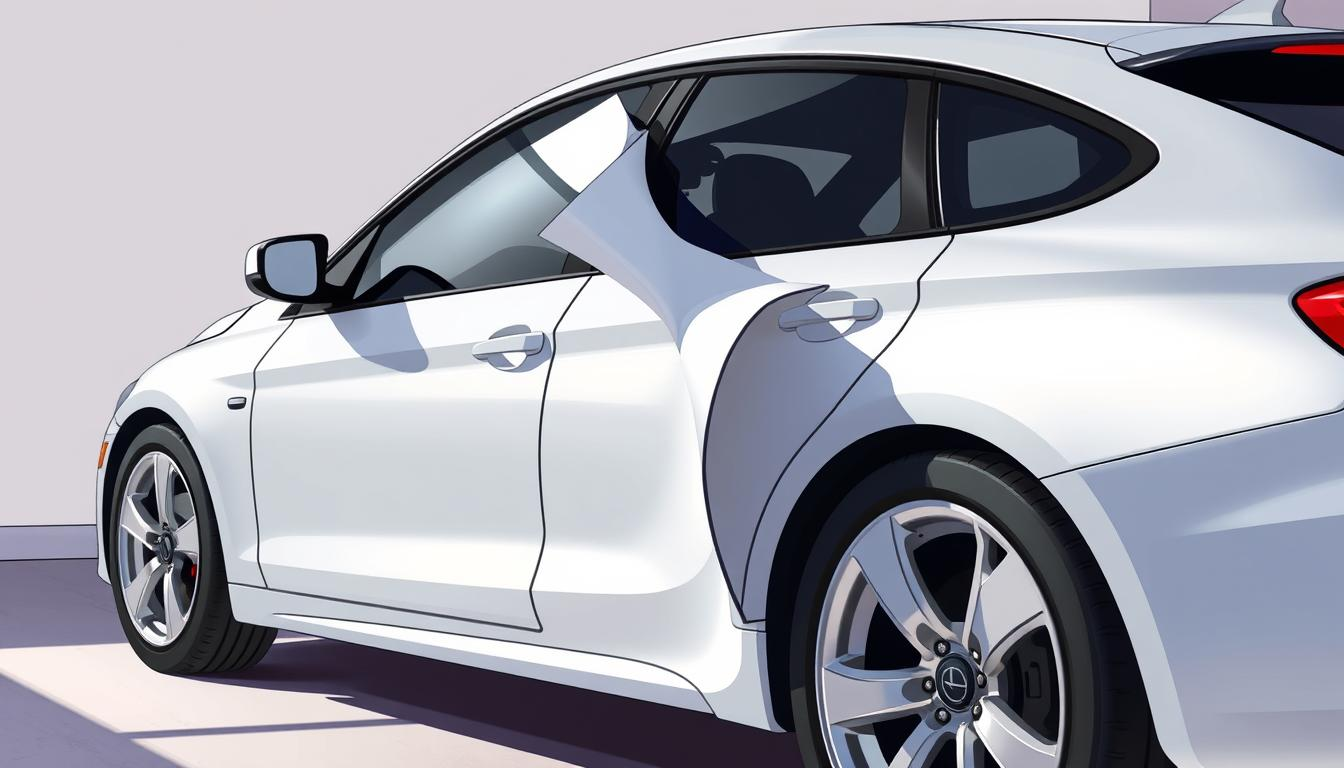
Removing a car wrap can be tough. But doing it safely is key to keep your car’s paint looking good.
Safe removal means you need to be careful. You must use the right methods to avoid harming your car’s finish. If you remove a car wrap wrong, you might leave sticky stuff or scratch the paint.
By taking the right steps, you can remove a car wrap safely. This keeps your car looking great and its value high.
Key Takeaways
- Understand the importance of safe car wrap removal.
- Learn the necessary steps for safe removal.
- Avoid common mistakes that can damage your vehicle’s paint.
- Discover the tools needed for a successful removal process.
- Preserve your vehicle’s finish and maintain its value.
Understanding Car Wraps and Their Lifespan
Before you try to remove a car wrap, know what it’s made of and how long it lasts. Car wraps are usually made from vinyl. This material can handle many weather conditions.
What Are Car Wraps Made Of?
Car wraps are mostly vinyl. You can find it in finishes like matte, gloss, and satin. The vinyl’s quality affects how long it lasts and looks.
Good vinyl wraps can last 3 to 5 years. They also protect your car’s paint.
Signs It’s Time for Removal
Here are signs it’s time to take off your car wrap:
- Fading or discoloration
- Cracking or peeling edges
- Loss of adhesion, causing bubbles or wrinkles
- Visible damage or tears
If you see these signs, remove the wrap carefully. This avoids hurting your car’s paint.
Knowing about car wraps helps you take care of them and remove them right. For more car wrap removal tips, keep reading the next sections.
Benefits of Proper Car Wrap Removal
Removing a car wrap right is more than just peeling off a sticker. It keeps your car looking new. It’s good for your car in many ways.
Protecting Your Vehicle’s Original Paint
Keeping your car’s paint safe is a big plus. A pro will remove the wrap without harming the paint. This is key if you’re selling your car or just want it to look new.
Preparing for a New Wrap Installation
Removing the old wrap is key for a new one. It makes the surface ready for the new wrap. Best practices for car wrap removal include cleaning and checking the surface well.
Maintaining Resale Value
Keeping your car’s value up is another big plus. A pro removal keeps the paint safe. This makes your car more appealing to buyers. Getting a professional car wrap removal service helps a lot.
Tools and Materials You’ll Need
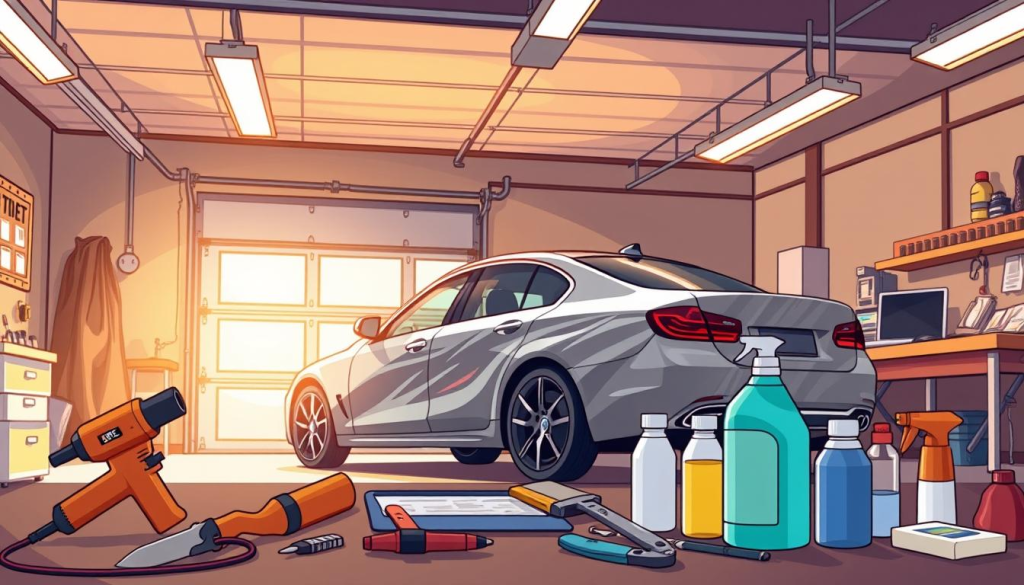
To remove a car wrap yourself, you need the right tools and materials. Being prepared is key for a smooth process.
Essential Removal Tools
Here are the tools you’ll need to remove your car wrap:
- A heat gun or hair dryer to loosen the adhesive
- A plastic scraper or squeegee to gently peel off the wrap
- Adhesive remover for any residue left behind
- Microfiber cloths for cleaning
Recommended Cleaning Products
For cleaning your car after removing the wrap, use:
- Mild soap or automotive-specific cleaning solutions
- Soft-bristle brushes for intricate areas
Safety Equipment
Always put safety first. Make sure you have:
Personal Protection
- Gloves to protect your hands from chemicals and sharp edges
- Safety glasses to shield your eyes from debris
Vehicle Protection
- Masking tape to protect sensitive areas like trim and moldings
- Drop cloths or old sheets to protect your work surface
| Tool/Material | Purpose |
|---|---|
| Heat Gun/Hair Dryer | Loosen adhesive |
| Plastic Scraper/Squeegee | Peel off wrap |
| Adhesive Remover | Remove residue |
With these tools and materials, you can safely and efficiently remove your car wrap.
Preparing Your Vehicle for Wrap Removal
To make sure your car wrap comes off safely, start by getting ready. This step is key to avoid harming your car’s paint. It also makes the removal go smoothly.
Ideal Weather Conditions
Find a day with mild weather for removing your car wrap. Stay away from very hot or cold days. Temperatures between 60°F to 80°F (15°C to 27°C) are best for this job.
Cleaning the Surface
Before you start, clean the wrap well. This stops dirt from getting stuck under the wrap. Use a soft soap and water mix, then dry it off.
Protecting Sensitive Areas
Use tape or film to cover trim, moldings, and emblems. This keeps them safe from damage during removal.
Setting Up Your Work Area
Make sure your work area is bright and free of clutter. Put down a cover or old sheets to catch any mess.
| Preparation Step | Purpose |
|---|---|
| Clean the wrap | Prevent dirt from being trapped under the wrap |
| Protect sensitive areas | Prevent damage to trim and moldings |
| Choose ideal weather | Ensure optimal adhesive properties |
How to Remove a Car Wrap: Step-by-Step Process
Removing a car wrap needs patience and the right tools. It’s important to know how to do it right. This way, you won’t damage your car’s paint.
Testing a Small Area First
First, test a small area before you start. This helps you see how the wrap reacts to heat. Pick a spot that’s not easy to see, like the edge of a door.
Using Heat to Loosen Adhesive
Heat is key in removing car wraps. It makes the adhesive loosen, so you can peel it off without harm.
Heat Gun Techniques
Move the heat gun around to avoid hot spots. Aim for a temperature of 200°F to 212°F. This works well for most wraps.
Temperature Control Tips
Don’t let the area get too hot. This can hurt the paint or make the adhesive too runny. Start with a low setting and increase it slowly.
Proper Peeling Techniques
After heating, start peeling the wrap. The way you peel matters a lot.
Angle and Direction
Peel at a 45-degree angle or lower. Pulling straight back can tear the wrap or leave adhesive behind. Start peeling from a corner and move along the edge.
Speed Considerations
Peel slowly and carefully. Hurrying can cause tears or harm the paint. If it’s hard to peel, stop and heat it more before trying again.
Dealing with Stubborn Sections
Some areas might be harder to peel. If a section is stubborn, heat it again and wait a bit before trying to peel it. For really tough spots, use a plastic scraper or a special tool for wrap removal.
| Step | Action | Tips |
|---|---|---|
| 1 | Test a small area | Use an inconspicuous spot to gauge the wrap’s reaction to heat. |
| 2 | Apply heat | Keep the heat gun moving to avoid overheating. |
| 3 | Peel the wrap | Peel at a 45-degree angle or lower for best results. |
Follow these steps and tips to remove your car wrap successfully. Remember, patience and the right technique are key.
Removing Adhesive Residue
After taking off the car wrap, you might see sticky stuff left on your car. This stuff is hard to get rid of but you can do it safely. You won’t hurt your car’s paint if you use the right methods and products.
Safe Adhesive Removers for Automotive Use
It’s very important to pick safe products for your car’s paint. Here are some good ones:
- Specialized adhesive removers like 3M Adhesive Remover
- Citrus-based cleaners
- Goo Gone
Techniques for Stubborn Residue
For tough sticky stuff, try these methods:
- Heat application: Use a heat gun or hair dryer to make it soft
- Gentle scraping: Use a plastic scraper or credit card carefully
- Repeated application of adhesive remover: Let it sit for a few minutes before wiping
What to Avoid When Removing Adhesive
To keep your car’s paint safe, don’t use:
- Harsh chemicals or rough stuff
- Metal scrapers, they can scratch
- Too much force, it can hurt the paint
By following these tips, you can make your car look new again.
Common Challenges and How to Overcome Them
Removing car wraps can be hard. You might face old wraps or tricky spots on your car. Knowing how to tackle these issues is key for a good removal.
Dealing with Aged or Damaged Wraps
Old or damaged wraps are hard to remove. The vinyl gets brittle and tears easily. Use a professional car wrap removal service or heat to loosen it. If you do it yourself, use the right tools to avoid harm.
Handling Wraps in Difficult Areas
Some car parts are harder to remove wraps from. This includes curves, shapes, and hidden spots.
Curves and Contours
For curved parts, use heat and a plastic scraper. Gently pull the wrap off. Don’t press too hard to avoid paint damage.
Recessed Areas
Areas like handles or emblems need care. Use a credit card to slowly loosen the wrap. Work slowly to prevent tears.
Addressing Paint Damage Concerns
Paint damage is a big worry when removing wraps. Check your car’s paint before you start. If it’s bad, get a professional car wrap removal service to protect it.
Knowing how to deal with these issues helps you remove car wraps smoothly and safely.
Post-Removal Care for Your Vehicle
After removing a car wrap, it’s important to take care of your vehicle. It might have sticky spots or small scratches. These need to be fixed.
Thorough Cleaning Process
Begin by washing your car well. Use a soft soap made for cars. Don’t use rough scrubbers that could scratch the paint. Rinse the vehicle thoroughly to get rid of all soap.
Inspecting for Paint Issues
After washing, check the paint for problems. Look for adhesive residue, scratches, or discoloration. Fixing these quickly helps avoid bigger damage later.
Applying Protection After Removal
To keep your car looking good, apply wax or a paint sealant. This makes the paint shine and protects it from the environment. 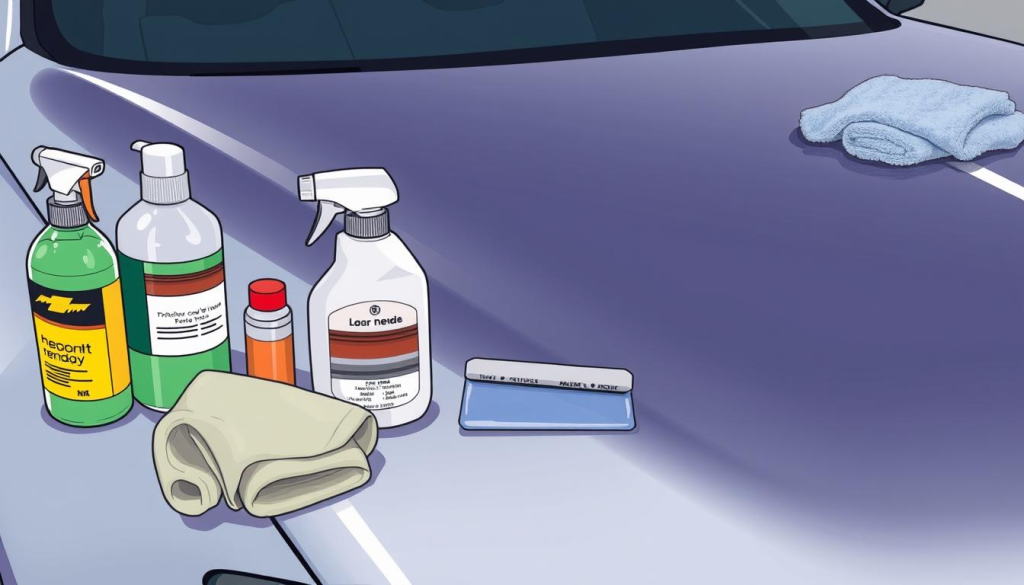
By following these steps, your car will stay in great shape after the wrap is off. Keeping up with maintenance will help your car look its best.
Environmentally Responsible Disposal
Removing a car wrap is just the start. It’s important to dispose of it in an eco-friendly way. This helps keep our planet clean.
Recycling Options for Vinyl Wraps
Many vinyl wraps can be recycled. Look for local recycling places that take vinyl. Some makers have programs to recycle their wraps.
Check with the maker or local waste to find out how to recycle your wrap.
Local Disposal Regulations
Know the rules for throwing away vinyl in your area. Some places have special rules for big vinyl sheets. Following these rules helps avoid fines and keeps our environment clean.
Reducing Environmental Impact
Try to reuse or repurpose your vinyl wrap if it’s still okay. Supporting local recycling or better waste management helps a lot.
These steps help make car wrap removal better for our planet. They follow green practices.
DIY vs. Professional Removal: What’s Right for You?
Choosing between DIY car wrap removal and a professional service depends on many things. It’s key to think about the good and bad of each choice when removing your car wrap.
When to Attempt DIY Removal
Try DIY car wrap removal if you’re good at similar tasks or if the wrap is new and in good shape. Using the right tools and techniques helps a lot. But, remember, wrong removal can harm your car’s paint.
When to Seek Professional Help
If your car wrap is old, damaged, or has been in bad weather, get professional help. They have the necessary expertise and equipment to remove it safely without hurting your paint.
Cost Comparison
DIY removal saves on labor costs but you’ll need to buy the right tools and materials. Professional services cost more for labor but ensure a safe and quick removal.
Time Investment Considerations
Removing a car wrap yourself takes a lot of time, more if you’re new to it. Professionals do it faster, saving you time and effort.
Why Choose 218 Customs for Professional Car Wrap Removal
If you need a professional car wrap removal service, 218 Customs is great. They have the skills and solutions for a smooth experience for car owners.
Expertise in Premium Products Like SunTek PPF
218 Customs is proud of its work with SunTek Paint Protection Film (PPF). They know how to remove car wraps carefully, making sure your car is safe.
Comprehensive Automotive Appearance Solutions
218 Customs does more than just remove wraps. They also tint and protect paint. They have everything you need to make your car look amazing.
Wraps, Tinting, and Paint Protection
They install and remove wraps, tint your car, and protect the paint. This keeps your car looking new.
End-to-End Customer Service
Customer service is key at 218 Customs. They help you from start to finish, making sure you’re happy.
Serving the Lakewood and Denver Metro Area
218 Customs is local and serves Lakewood and Denver. They offer personal service to car owners in these areas.
| Service | Description | Benefits |
|---|---|---|
| Car Wrap Removal | Expert removal of car wraps | Protects original paint, prepares for new wrap |
| Tinting | Interior tinting services | Reduces glare, protects interior |
| Paint Protection | Paint protection film installation | Guards against scratches, UV damage |
Educational Approach to Car Care
218 Customs wants to teach car owners. They share knowledge on how to keep your car looking good.
Choosing 218 Customs for car wrap removal means you get a top service. Plus, you get a partner in keeping your car looking great.
Conclusion
Removing a car wrap can seem hard, but it’s doable with the right steps. You’ve learned how to do it safely in this article. This way, you protect your car’s paint and keep its value high.
It’s important to remove a car wrap safely to avoid damage. Use tools like heat guns and special removers. If you’re not sure, get help from experts like 218 Customs. They know about SunTek PPF.
Knowing how to remove a car wrap safely keeps your car looking great. Whether you’re getting a new wrap or keeping it original, follow the right steps. Your car will look amazing.