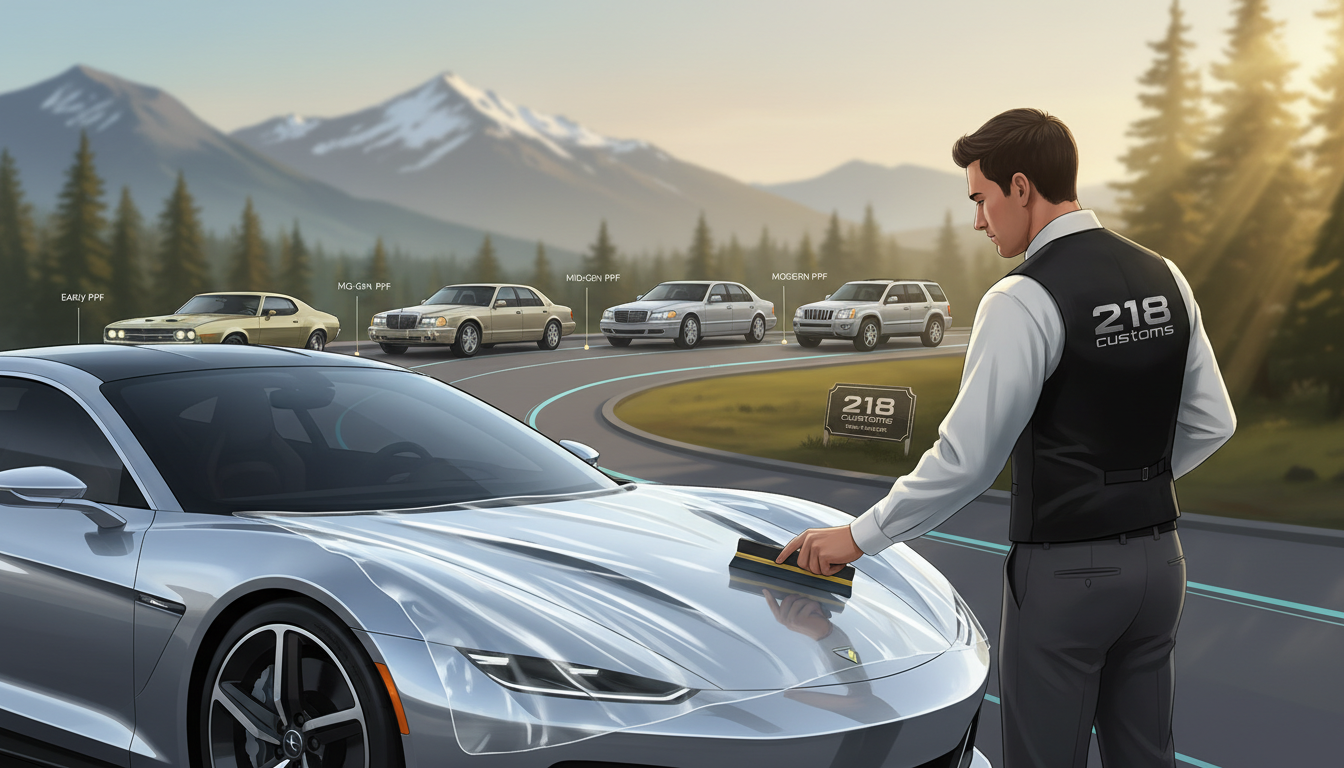
The idea of protecting surfaces from damage goes back to ancient times. But the story of Paint Protection Film (PPF) is amazing. It started as a special military tool and now is a key part of car care.
PPF was first made for the military. Now, it’s a must-have for car owners. It keeps their car’s paint and look in top shape.
Today, PPF is used to shield cars from many kinds of damage. It makes sure they stay looking new.
Key Takeaways
- PPF originated from military applications.
- Material science innovation drove the evolution of PPF.
- PPF is now a vital accessory in the automotive industry.
- It provides protection against various forms of damage.
- PPF helps maintain a vehicle’s original styling and paint.
The Origins of Automotive Protection Films
Automotive protection films started in the Vietnam War era. The US military needed a way to protect helicopter rotor blades from debris. 3M created a transparent, durable film to solve this problem.
Military Applications: Where It All Began
This protective film was key for military aircraft to stay ready. It shielded rotor blades from damage, making them last longer. This was the start of Paint Protection Film (PPF), which would later help cars too.
Transition to Civilian and Automotive Use
As PPF technology got better, it moved to cars. It first protected high-value vehicles from road debris. This was a big step in making military tech useful for cars.
First Commercial Applications
First, luxury car owners used PPF to keep their cars looking good. It helped avoid expensive paint repairs. Soon, more people saw the value of PPF and started using it.
Early Paint Protection Films: The First Generation
The first paint protection films had big problems. They were simple and often yellowed, bubbled, and lost clarity. These issues made them less effective and less attractive.
Initial Limitations and Challenges
Early PPF faced many challenges. They were hard to install and had inconsistent materials. This led to poor finishes that didn’t look good on cars. The materials were also not as good as today’s, causing many problems.
Appearance and Durability Concerns
The look and durability of early PPF were big worries. They would fade and lose their protective qualities over time. This fading was often noticeable, with the film turning yellow or bubbling.
Yellowing and Degradation Issues
Yellowing was a major problem with early PPF. It wasn’t just ugly; it showed the film was breaking down. As it broke down, it couldn’t protect the paint as well. For more on PPF evolution, visit https://automask.ca/en/the-evolution-of-ppf-paint-protection-technology-and-its-benefits/.
Even with their flaws, early PPF were important steps in protecting cars. They laid the groundwork for today’s better films. The advancements in paint protection film technology have been huge, thanks to ongoing research.
The Evolution of Paint Protection Film Through the Decades
The journey of paint protection film has been amazing. It has seen big steps forward over the years. As cars got smarter, so did the ways to keep their paint safe, leading to today’s advanced PPFs.
Establishing the Foundation: 1990s
The 1990s were key for modern PPF. Companies started to really work on making PPF better. They focused on making it clearer and more lasting, even if it wasn’t perfect yet.
Improved Clarity and Durability: 2000s
In the 2000s, PPF got a lot better. It became clearer and lasted longer, making it a hit with car owners. This decade was important for making PPF a real choice for car protection.
Self-Healing Revolution: 2010s
The 2010s were a game-changer with self-healing PPFs. These films could fix small scratches and damages by themselves. This made them even better at protecting cars.
The progress in PPF technology over the years is shown in the table below:
| Decade | Key Advancements | Impact |
|---|---|---|
| 1990s | Initial breakthroughs in clarity and durability | Laid the foundation for modern PPF |
| 2000s | Improved clarity and durability | Established PPF as a viable automotive protection option |
| 2010s | Introduction of self-healing properties | Enhanced protective capabilities and longevity |
The ongoing evolution of paint protection film has changed the car world. It has given car owners great ways to keep their paint safe. With technology getting better, we can look forward to even more advanced PPFs in the future.
Material Science Advancements in Modern PPF
Paint protection films (PPF) have seen big changes thanks to new material science. Today’s PPF is more durable, clear, and has extra protection features. These updates have made PPF better at protecting cars and trucks.
Self-Healing Properties Development
One big step forward is self-healing PPF. This tech fixes small scratches and damages on its own. It uses a special topcoat that reacts to heat to fix itself.
UV Resistance Improvements
PPF now also protects better against UV rays. This keeps the film and paint from breaking down. For more on UV-resistant PPF, check out https://218customs.com/ppf/.
Hydrophobic and Stain-Resistant Technologies
PPF also has new water and stain-repelling tech. This makes it easier to keep your car’s surface clean. Water and dirt just slide off the film.
Nanotechnology Integration
Nanotechnology plays a big role in these new features. It lets makers create films that are thin but strong. These films protect well without losing their look or clarity.
| Feature | Description | Benefit |
|---|---|---|
| Self-Healing | Automatically repairs minor scratches | Maintains appearance, reduces maintenance |
| UV Resistance | Protects against ultraviolet radiation | Preserves paint integrity, prevents degradation |
| Hydrophobic & Stain-Resistant | Repels water and contaminants | Eases cleaning, reduces damage risk |
| Nanotechnology | Enhances film properties at molecular level | Superior protection, clarity, and durability |
Application Techniques: Then and Now
Paint Protection Film (PPF) application has changed a lot over time. It has moved from simple methods to advanced, precise ways. This change came from new technology, better materials, and a need for better car protection.
Early Installation Methods and Their Limitations
At first, PPF was installed by hand, which was hard work. People used basic tools and methods. This often led to mistakes and poor results.
These old ways had big problems, like:
- Bad fits and risk of damage
- Long installation times
- More chance of air bubbles and wrinkles
- Hard to find special tools and training
Modern Application Techniques
New technology like CAD and CAM has changed PPF installation. Now, software makes custom film patterns for each car. This makes the job more accurate and less prone to mistakes.
Modern PPF application has many benefits, like:
- More accurate and precise: CAD/CAM tech ensures a perfect fit, reducing errors.
- Less time needed: Pre-cut film makes the job faster and more efficient.
- Better quality: New materials and methods lead to a better finish and longer life.
Computer-Aided Design and Custom Fitting
CAD/CAM technology lets installers make PPF that fits each car perfectly. This means better protection for each vehicle.
The growth of PPF technology has brought many benefits. These include clearer, more durable, and self-healing films. As technology keeps improving, we’ll see even better PPF solutions.
| Application Technique | Advantages | Limitations |
|---|---|---|
| Manual Cutting | Low initial investment | Inaccurate, labor-intensive, higher risk of imperfections |
| CAD/CAM | High accuracy, reduced labor time, enhanced quality | Higher initial investment in technology |
Expanding Protection: Beyond the Front Bumper
Paint Protection Films (PPF) have grown a lot, offering more than just front bumper protection. Now, there are many options for different vehicles and tastes. This means you can find PPF that fits your car perfectly.
Full Vehicle Coverage Options
Now, you can get PPF that covers your whole car. This keeps your car looking new and its value high. Learn more about PPF and how it can help your car.
Specialized Protection for High-Impact Areas
PPF also protects areas that get hit a lot. These spots are at risk from road debris and more. PPF helps keep your car’s paint safe from scratches and damage.
Interior Protection Films
There are also PPF films for the inside of your car. They keep the interior looking good for longer. This means your car’s inside stays nice and clean.
Customization and Pattern Options
PPF lets you choose how your car looks. You can pick patterns and designs that match your style. This makes your car look great and stay protected.
PPF has changed how we protect our cars. With its long history and ongoing updates, PPF is key to keeping your car in top shape.
Aesthetic Evolution: From Visible Protection to Invisible Shield
Paint Protection Films (PPF) have changed a lot. They now look almost invisible, making cars look better and last longer. These films protect the paint without changing how the car looks.
Clarity and Optical Improvements
PPF has gotten clearer and better-looking. Today’s films are almost as clear as the car’s paint. This means the car’s color and shine stay the same, keeping it looking great.
Matte, Satin, and Gloss Finish Options
Now, PPF comes in many finishes. You can choose from matte, satin, or gloss. This lets you pick a look that fits your style while still protecting your car.
Paint Enhancement Properties
Some PPFs even make the car’s paint look better. They can make the color pop and the paint look newer. Experts say the right PPF can make the paint look great and keep it safe. For more on protecting your car, visit UltraGuard India.
Color-Shifting and Decorative Films
Color-shifting and decorative films let you really stand out. They change color with the light, adding a cool twist to your car’s look. For a look at vinyl wraps versus paint, check out 218 Customs.
In short, PPF has evolved a lot. It now offers many ways to protect and enhance your car’s look. With better clarity, finish options, and special films, PPF is key for car customization and protection.
Environmental Adaptations in PPF Development
Paint Protection Films (PPF) have seen big improvements lately. This is thanks to better environmental adaptations. The car industry is now making films that can handle different weather conditions.
Climate-Specific Formulations
PPF makers are now making films for different climates. For example, films for hot places have better UV protection. Films for cold places stay flexible even when it’s freezing.
| Climate | PPF Formulation | Key Features |
|---|---|---|
| Hot and Sunny | UV-Resistant | Enhanced UV protection, heat resistance |
| Cold | Low-Temperature Flexible | Maintains flexibility in cold temperatures |
| Coastal | Salt-Resistant | Resistant to saltwater corrosion |
Chemical and Contaminant Resistance
Today’s PPFs can also handle chemicals and dirt better. They resist road salts, insecticides, and other harmful substances that can harm car paint.
- Chemical Resistance: Protects against harsh chemicals and contaminants
- Easy Cleaning: Hydrophobic properties make cleaning easier
Eco-Friendly Manufacturing Processes
PPF makers are also going green. They use recyclable materials, cut down on waste, and make production more energy-efficient.
By focusing on environmental adaptations, PPF makers are making films better and greener. This helps both the cars and the planet.
The Integration of PPF with Other Protection Technologies
PPF is getting better and is now paired with other protective tech. This mix creates stronger and more flexible protection options.
Ceramic Coating Compatibility
PPF now works well with ceramic coatings. These coatings add extra water-repelling and stain-fighting powers. Together, they form a dual-layer protection system that fights off many environmental dangers.
Hybrid Protection Systems
Hybrid systems are a big step forward in PPF tech. They mix PPF with materials like ceramic coatings or nanotech coatings. This creates a comprehensive protection solution that guards against many threats to a car’s paint and surfaces.
Digital Integration and Smart Films
PPF is also being linked with digital tech. Smart films are being made that can adjust to environmental changes in real-time. This could lead to smarter, more adaptable protection.
Performance Monitoring Capabilities
One great thing about digital integration is it lets us check PPF’s performance live. This means we can do proactive maintenance and keep the protection system at its best.
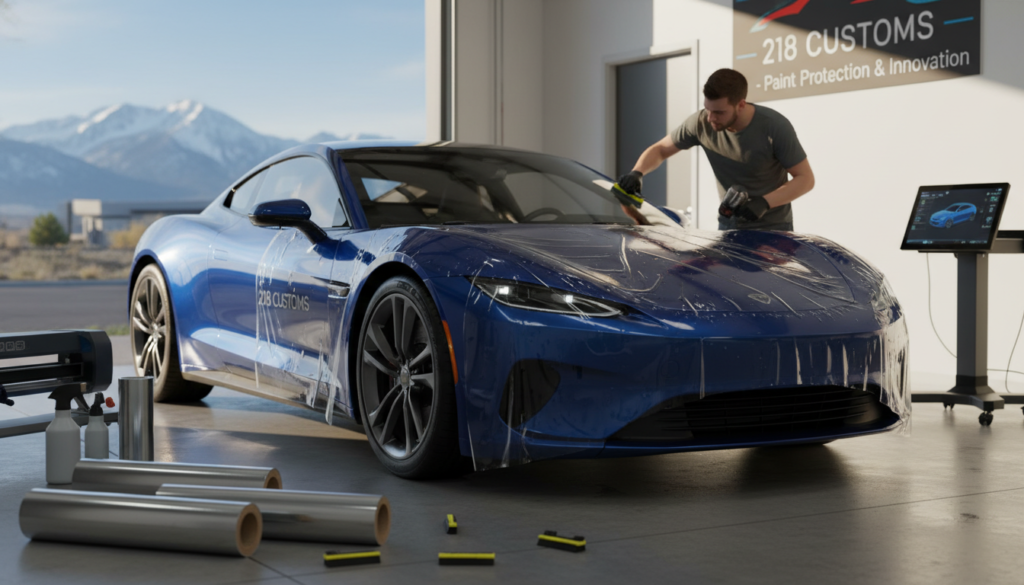
The future of PPF is bright, thanks to its growing connection with other protective tech. This will lead to even better and more complete car protection solutions.
Conclusion: The Future of Vehicle Protection Films
The evolution of paint protection film has changed how we protect vehicles. It has brought new solutions to meet different needs. Looking ahead, PPF’s history and growth will shape the car industry.
Thanks to new materials and application methods, cars get better protection. This includes against weather and road dangers. Adding PPF to other technologies, like ceramic coatings, opens up more protection options.
As cars keep changing, knowing about PPF updates is key. This helps car owners keep their vehicles safe. By keeping up with PPF’s evolution, they make smart choices for their car’s protection.