
Investing in Paint Protection Film (PPF) is a big step for car owners. They want to protect their car’s paint. 218 Customs, a top name in car customization and protection, explains why PPF is key and its lasting benefits.
After years on the road, it’s key to know how top PPF stands up. XPEL PPF, the top in the field, is made to last against the weather. But, what changes can you see in PPF over time? And when should you replace it?
Key Takeaways
- PPF changes over time due to exposure to the elements.
- Premium PPF, like XPEL PPF, offers long-lasting protection.
- Understanding PPF’s longevity is crucial for vehicle owners.
- Regular maintenance is necessary to ensure PPF’s effectiveness.
- Replacing PPF may be necessary after a certain period.
Understanding Paint Protection Film (PPF) Basics
## Understanding Paint Protection Film (PPF) Basics
Paint Protection Film (PPF) is a clear film that protects a vehicle’s paint. It’s popular because it keeps the vehicle looking new. This film is a must-have for car owners who want to keep their car in top shape.
### What is Paint Protection Film?
PPF is made from polyurethane and an elastomeric polymer. This mix makes it flexible and strong. It can handle impacts from road debris like rocks and gravel without harming the paint. Plus, it’s almost invisible on the car.
### How PPF Protects Your Vehicle
PPF acts as a shield between the paint and outside damage. It guards against small scratches, bug splatters, and UV damage from the sun. This way, it keeps the paint looking new, which helps the car’s value and looks stay high.
### Common Applications and Coverage Areas
PPF is often put on areas that get hit a lot, like the front bumper and hood. Some people also cover the side mirrors and other parts. The choice of where to apply it depends on how much protection you want.
Knowing how PPF works helps car owners make smart choices. Whether you choose to cover just a few spots or the whole car, PPF is a strong defense against damage from the environment and road.
The Composition and Structure of Modern PPF
Today’s PPF has many layers, each with its own job. They work together to protect against different types of damage. This is key to understanding how modern PPF keeps your car safe.
Layers of Protection in Quality PPF
Quality PPF has several layers. There’s a topcoat that heals itself, a polyurethane base for flexibility, and an adhesive for sticking to the paint. Together, these layers make a strong protective film that can handle many challenges.
Self-Healing Properties Explained
Modern PPF has a cool feature: it can heal itself. Small scratches and swirls can fix themselves over time, thanks to heat. The top layer of the PPF goes back to its original state, keeping the film looking new.
Adhesive Technology Behind PPF
The adhesive in PPF is strong but gentle. It sticks well without harming the paint. Advanced adhesive tech is key to PPF’s success and lasting protection.
Knowing how modern PPF is made helps us see its value in protecting car paint. As PPF gets better, understanding its changes is important for keeping your car looking great.
Expected Lifespan of Paint Protection Film
Many car owners ask how long Paint Protection Film lasts. They also want to know what affects its durability. The life of PPF depends on several things like the film’s quality, the environment, and how well it’s cared for.
Manufacturer Warranty Periods
Top PPF makers usually give warranties that last from 5 to 10 years. This shows they believe in their product’s lasting power. Some brands even offer a 7-year warranty, covering any defects in material or workmanship. It’s important to check the warranty details, as they can differ a lot between brands.
Realistic Expectations for PPF Longevity
While warranties give a starting point, the real life of PPF can change. High-quality PPF is made to last 5 to 10 years if it’s looked after right. Things like sunlight, how you drive, and how you care for it can all affect how long it lasts.
Factors That Determine How Long PPF Lasts
Several things can affect how long PPF stays good, including:
- Quality of the film
- Environmental exposure (UV rays, extreme temperatures)
- Maintenance practices
- Daily driving conditions
| Factor | Impact on PPF Longevity |
|---|---|
| UV Exposure | Can cause yellowing or degradation |
| Extreme Temperatures | May affect adhesive properties |
| Maintenance Practices | Regular cleaning can extend lifespan |
What Happens to PPF Over Time: The Aging Process
Knowing how PPF ages is key for car owners who want to keep their paint looking good. As PPF gets older, it changes in ways that can impact how it looks and works.
Initial Break-In Period
At first, PPF might look a bit different, like it’s adjusting to the car’s paint. This early time is important for how well the film will perform later on.
Mid-Life Performance Changes
When PPF is in the middle of its life, it might start to show wear. You might see it turn a bit yellow or notice edges lifting. These signs are normal and can be kept in check with the right care. For example, washing it regularly and avoiding harsh chemicals can help it last longer. Learn more about PPF maintenance.
End-of-Life Characteristics
When PPF is nearing the end, it will show more obvious signs of aging. You might see it turn yellow, edges lifting, or even crack. After 15 years, XPEL PPF will start to show these signs. Knowing when it’s time for a replacement or maintenance is crucial.
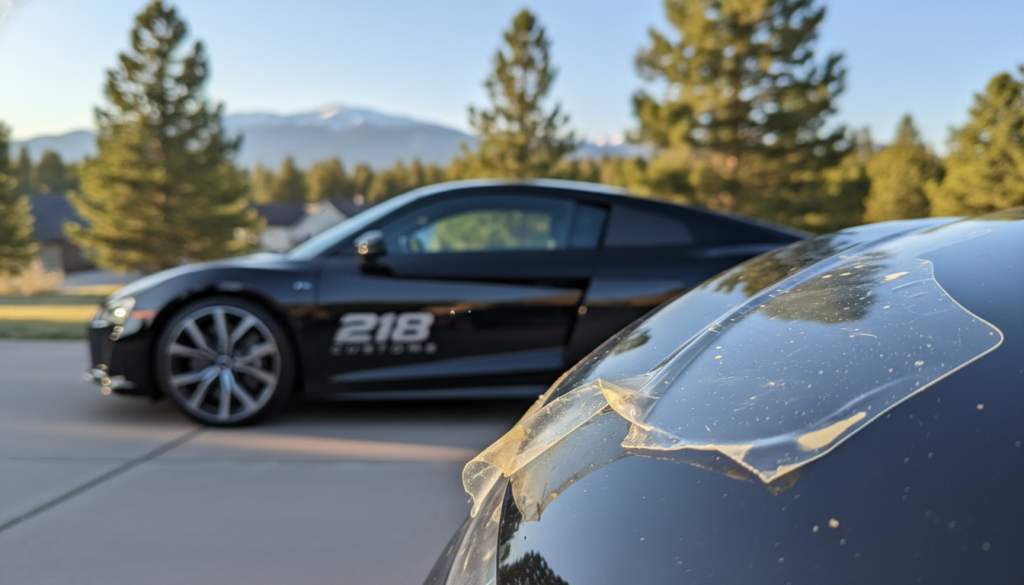
The aging of PPF is influenced by many things, like the environment and physical stress. By understanding these factors, car owners can take steps to extend their PPF’s life.
Environmental Factors That Impact PPF Durability
PPF faces many environmental challenges that can harm its durability and look. Knowing these factors helps keep PPF effective in protecting car paint.
Effects of UV Exposure and Sunlight
UV rays from the sun are a big problem for PPF. They can make the film fade, become hard, or even crack. High-quality PPF has UV inhibitors to help, but too much sun can still shorten its life.
How Extreme Temperatures Affect PPF
Extreme heat and cold can make PPF expand and contract. This can lead to cracks or it coming off. In hot weather, the adhesive gets softer, and in cold, it gets harder. This stress can harm the film’s bond to the paint and its overall strength.
Impact of Road Salt and Chemical Exposure
Road salt and chemicals can really hurt PPF. They can get into the film and damage the adhesive, causing it to come off or change color.
Winter Road Treatments
In winter, roads get salt and chemicals to make them slippery. These can really affect PPF, if you drive on them a lot.
Industrial Fallout Concerns
Industrial fallout, like pollutants and dust, can also harm PPF. These can settle on the film and cause damage or color changes if not cleaned off.
| Environmental Factor | Impact on PPF | Mitigation Strategies |
|---|---|---|
| UV Exposure | Fading, brittleness, cracking | UV inhibitors, regular washing |
| Extreme Temperatures | Expansion, contraction, cracking | Parking in shaded areas, avoiding extreme temperatures |
| Road Salt and Chemicals | Delamination, discoloration | Regular washing, avoiding salt-treated roads |
Physical Stressors and Their Long-Term Effects
PPF is made to handle many physical stressors. But, knowing how they affect it over time is key for car owners. Stressors like rock impacts, bug splatter, and pressure washing can all harm PPF’s longevity and look.
Rock Impacts and Abrasion Resistance Over Time
PPF protects against rock impacts and small scratches. Yet, repeated hits can wear it down. As it ages, its abrasion resistance might drop, making it more open to damage from road debris.
Bug Splatter and Organic Material Damage
Bug splatter and other organic stuff can harm PPF if not cleaned right away. The acidic nature of bug splatter can etch into the film, causing lasting damage. It’s important to clean it regularly to avoid this.
Pressure Washing and Mechanical Cleaning Effects
Pressure washing is a common way to clean cars, but it can harm PPF if not done right. High-pressure washes can cause edge lifting or damage the film’s surface. Using wide fan tips and keeping the nozzle at least 12 inches away can help reduce damage.
By knowing the physical stressors that can affect PPF, car owners can keep it in good shape. This helps extend its life and keep it protecting your car.
Visual Changes in PPF Through Its Lifecycle
## Visual Changes in PPF Through Its Lifecycle
As Paint Protection Film (PPF) ages, it changes in appearance and function. At first, PPF is very clear and almost invisible. But, over time, it may lose some of its clarity due to the environment.
### Clarity and Transparency Evolution
Many things can affect PPF’s clarity. UV rays, temperature changes, and chemicals can cause it to haze or cloud. This effect gets worse as the film gets older.
| Factor | Effect on Clarity | Timeline |
| — | — | — |
| UV Exposure | Gradual hazing | 2-5 years |
| Temperature Fluctuations | Minor clouding | 3-7 years |
| Chemical Contaminants | Spotting or staining | Variable |
### Discoloration and Yellowing Patterns
PPF can also change color, often due to UV rays or chemicals. The speed and degree of color change depend on the film’s quality and the environment.
As PPF ages, it may lift off the car or lose adhesion. This makes it less effective at protecting the paint. Edge lifting happens when the film starts to peel off, letting dirt in.
To avoid these issues, it’s crucial to install and maintain PPF correctly. For tips on keeping your PPF in good shape, visit218customs.com/ppf/.
Maintaining PPF for Maximum Lifespan
To keep your Paint Protection Film (PPF) in top shape, follow a regular care routine. This means using the right cleaning products, staying away from harsh chemicals, and thinking about getting professional help.
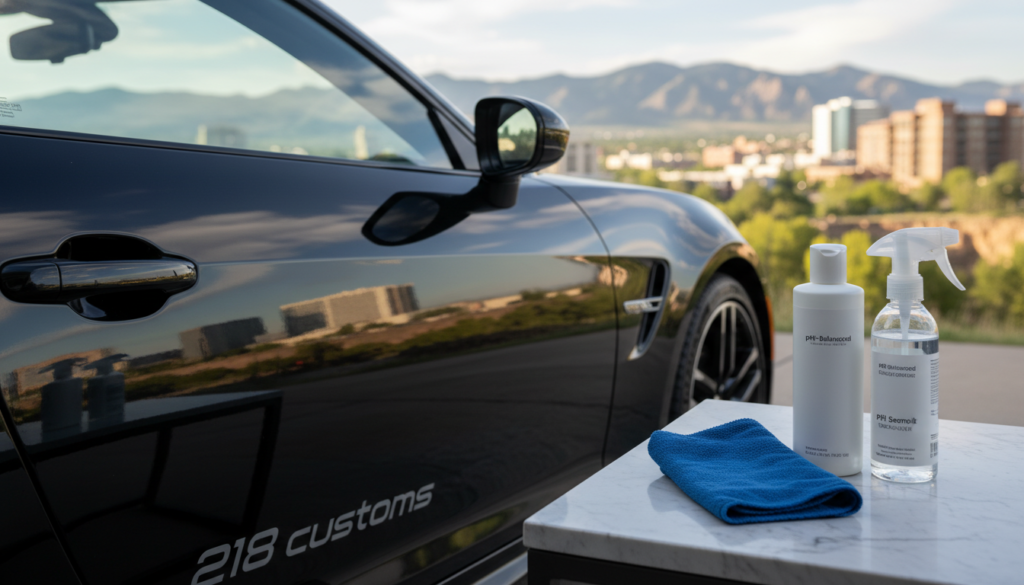
Cleaning your PPF regularly is key to keeping it clear and working well. Use a mild soap that’s pH-neutral and a soft microfiber cloth to clean it gently. Don’t use household cleaners or rough materials that can harm the film.
Recommended Cleaning Protocols
For the best results, clean your PPF often with a soft, microfiber cloth and a mild, pH-neutral soap. Don’t use high-pressure washes or rough sponges, as they can harm the film.
- Use a mild, pH-neutral soap
- Avoid high-pressure washes
- Gently clean with a microfiber cloth
Products to Use and Avoid
Choosing the right cleaning products for your PPF is important. Stay away from harsh chemicals or abrasive cleaners, as they can damage the film. Instead, go for mild, pH-neutral soaps and soft microfiber cloths.
Avoid: Harsh chemicals, abrasive cleaners, high-pressure washes
Use: Mild, pH-neutral soap, microfiber cloths
Professional Maintenance Services
For deeper maintenance, think about getting a pro to check and care for your PPF. They can offer services like:
Annual Inspections
Annual checks can spot any PPF problems early, before they get big.
Rejuvenation Treatments
Rejuvenation treatments can make your PPF look new again, keeping it in great shape.
By following these tips, you can make your PPF last longer and stay looking great.
Signs That Your PPF Needs Replacement
Knowing when to replace your PPF is key to keeping your car safe. As PPF gets older, several things can make it less effective and less good-looking.
Visual Indicators of PPF Failure
Big changes like yellowing, edge lifting, and bubbling mean your PPF is wearing out.Check your PPF oftento spot these problems early.
| Indicator | Description |
|---|---|
| Yellowing | PPF turns yellow because of UV rays and aging |
| Edge Lifting | PPF edges start to lift off the car’s surface |
| Bubbling | Air bubbles form under the PPF because of moisture or debris |
Performance Degradation Warning Signs
If your PPF isn’t protecting your car as well as it used to, it might be time for a new one. Regular care can help your PPF last longer, but it will eventually need to be replaced.
When Repairs Are Possible vs. Full Replacement
Small damages might be fixable, but big damage often means you need a new PPF. Check your PPF’s condition to decide what’s best.
By knowing when to replace your PPF, you can keep your car safe and looking great.
The PPF Removal Process and What to Expect
Removing Paint Protection Film (PPF) needs careful steps to avoid paint damage. You can choose to have a pro do it or try it yourself. Knowing the process is key for a good result.
Professional vs. DIY Removal Considerations
Getting a pro to remove PPF is best to protect your paint. They use special tools and methods for safe removal. If you’re doing it yourself, follow the right steps and use the right materials to avoid problems.
Impact on Original Paint After Long-Term PPF Use
PPF can stick to paint over time, leaving residue. The right removal methods are important to avoid paint damage. Usually, the paint stays good, but any damage might show more after PPF is removed.
Preparing for New PPF Installation
Before putting on new PPF, make sure the surface is clean and free of dirt. Check the paint for any damage or blemishes that need fixing. Good preparation is essential for the best results with your new PPF.
Advancements in PPF Technology and Durability
PPF has evolved a lot since it started. Today, it’s clearer and can fix itself. This change is because people want better paint protection.
Evolution of PPF Materials Over the Decades
PPF’s makeup has changed a lot over time. At first, it just protected against small scratches. Now, modern PPFs are made with better materials. They last longer, look clearer, and can fix themselves.
The use of thermoplastic polyurethane (TPU) has made PPF more flexible and strong. This is a big improvement.
Latest Innovations in Longevity
New PPF tech is all about lasting longer and working better. Nanotechnology is being used to make PPF heal itself faster. It also fights off damage from the environment better.
Also, new adhesives help PPF stick better and last longer. If you’re thinking about vinyl wraps instead, check out our vinyl wrap vs paint comparison.
Future Trends in Paint Protection Technology
The future of PPF looks bright, thanks to new research. We might see graphene and other new materials soon. These could make PPF even better.
As cars get more advanced, we’ll need PPF that keeps up. This will lead to even more cool tech in the future.
Conclusion: Making the Most of Your PPF Investment
Knowing how PPF changes over time is key to getting the most out of it. By picking high-quality PPF and taking good care of it, car owners can keep their investment safe. As PPF gets older, it can change in ways like losing clarity, getting discolored, or lifting at the edges. Knowing about these changes helps owners prepare for and fix any issues.
Things like the environment and physical stress can affect how long PPF lasts. Keeping up with new PPF technology can also help. For example, new materials make PPF more durable and able to heal itself.
To get the best from your PPF, follow the right care steps and keep up with new PPF info. For more on finding top PPF installers and prices, check out 218 Customs. This way, your car stays safe and its value stays high over time.
## FAQ
### Q: What is Paint Protection Film (PPF) and how does it work?
A: Paint Protection Film (PPF) is a clear film that protects a vehicle’s paint. It absorbs impacts and shields the paint from damage. This includes road debris and minor abrasions.
### Q: How long does PPF typically last?
A: PPF’s lifespan depends on its quality, the environment, and how well it’s maintained. Manufacturers often give warranties that show how long they think it will last.
### Q: What happens to PPF over time?
A: Over time, PPF can change in appearance and performance. It may lose clarity, change color, or lift at the edges.
### Q: How do environmental factors impact PPF durability?
A: UV radiation, extreme temperatures, and chemicals can harm PPF. These factors can affect how well it works and looks.
### Q: Can PPF be repaired or does it need to be replaced?
A: Sometimes, PPF can be fixed, but often it needs to be replaced. The choice depends on the damage and the film’s age.
### Q: How do I maintain my PPF for maximum lifespan?
A: To keep PPF in good shape, follow cleaning tips and use the right products. Professional services and regular checks can also help.
### Q: What are the signs that my PPF needs replacement?
A: Look for signs like big color changes, edge lifting, and if it doesn’t self-heal as well. These mean it’s time for a new one.
### Q: Can I remove PPF myself or should I hire a professional?
A: You can try to remove PPF yourself, but it’s safer to hire a pro. They have the tools and know-how to avoid paint damage.
### Q: How has PPF technology advanced over the years?
A: PPF technology has gotten much better. Now, it has more layers, self-healing, and better adhesives for longer protection.
### Q: What are the latest innovations in PPF longevity?
A: New PPF has better materials, self-healing, and adhesives. These advancements mean it lasts longer and protects better.
### Q: What can I expect when removing old PPF and installing new PPF?
A: Removing old PPF might leave paint residue. Make sure to clean the surface well before putting on new PPF for the best results.